Peppermint Oil for Headaches and Migraines
Discover how peppermint essential oil offers natural support for headaches and migraines. Safe application tips, doTERRA options, and FAQs.
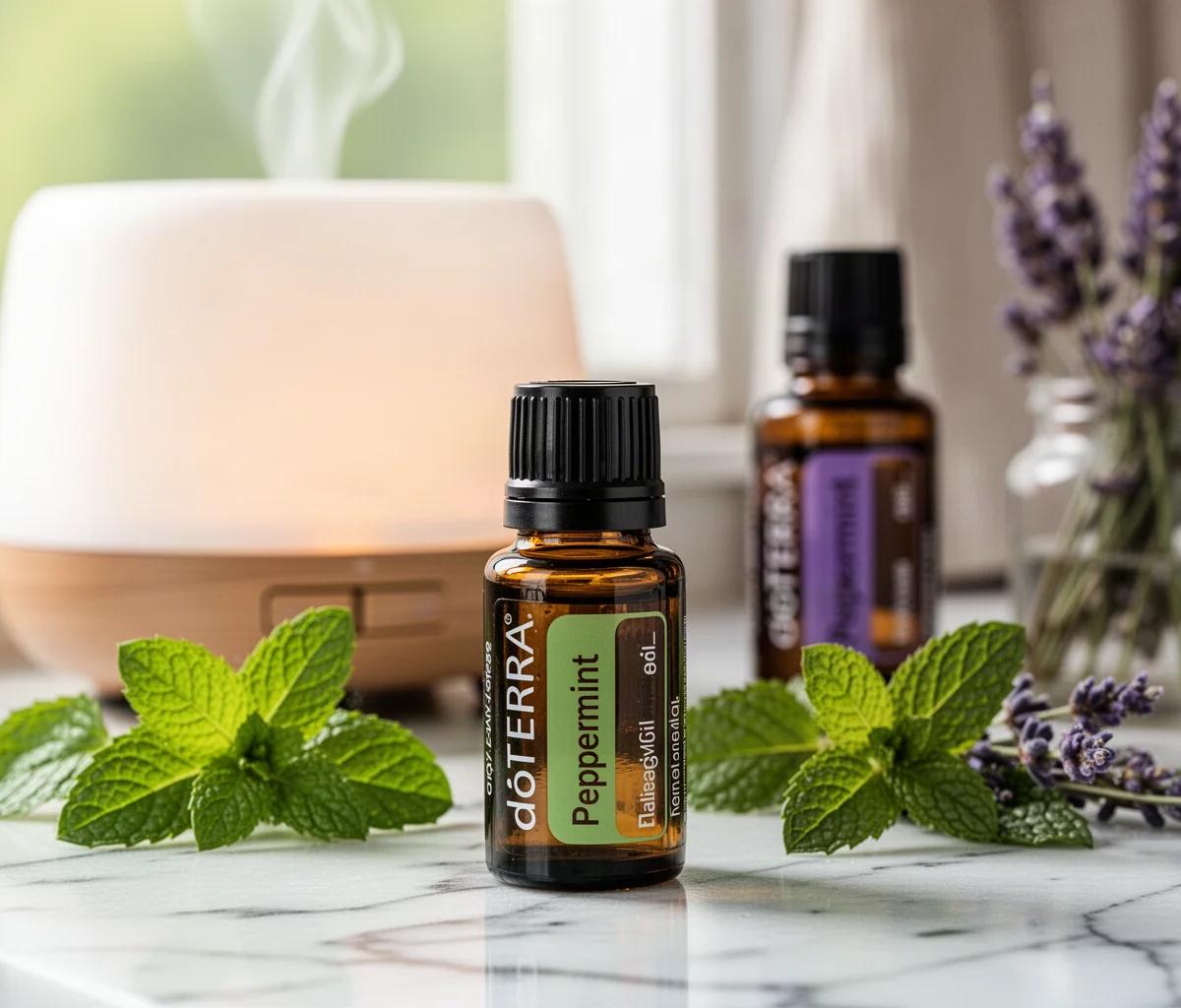
By Essential Synergy Team — Wellness Advocates & doTERRA enthusiasts
The dull throb starts behind your eyes right around 2 p.m., and by 3 p.m. you're rubbing your temples and squinting at your screen. Before you reach for another pill, consider what a single drop of peppermint essential oil might do.
The direct answer: peppermint oil is one of the most widely used essential oils for headache support. Its key compound, menthol, creates a cooling sensation on the skin that many people find soothing during tension headaches and mild migraine episodes. It works best as a quick, aromatic intervention at the first sign of discomfort, applied to the temples, forehead, and back of the neck. It's not a cure, but in our experience, it often helps create a pause, a deep breath, and a moment of relief that breaks the headache cycle early. For occasional headaches, it's a practical, natural tool worth keeping within arm's reach.
Why Peppermint Oil Stands Out for Headaches
Peppermint essential oil earns its reputation for one main reason: the cooling effect of menthol. When diluted and applied to the skin, it triggers a noticeable cooling sensation that distracts from the dull ache underneath. Research published on PubMed has explored topical peppermint oil for tension-type headaches, with some studies noting comparable satisfaction levels to standard over-the-counter pain relievers in certain contexts.
What makes it especially practical:
- It's fast: the cooling effect begins within a minute or two of application.
- It's portable: a 5 ml bottle fits in a pocket, purse, or desk drawer.
- It layers well: combine it with deep breathing or a short screen break for stronger results.
- It's multi-purpose: the same bottle supports post-workout cooling, stuffy-season comfort, and afternoon focus.
Step-by-Step: How to Apply Peppermint Oil for a Headache
Follow these steps at the first sign of pressure or pain. Dilution matters, especially near the eyes.
- Dilute one drop. Mix 1 drop of peppermint oil with 1 teaspoon of carrier oil (fractionated coconut oil, jojoba, or sweet almond oil). Never apply undiluted peppermint oil directly to large areas of skin.
- Test a small patch first. Dab the diluted mixture on your inner forearm. Wait 5 minutes. If redness or irritation appears, skip topical use.
- Apply to pulse points. Using your fingertip, massage a small amount into your temples, the base of your skull, and the back of your neck. Avoid the eye area completely.
- Inhale deeply. Cup your hands over your nose (without touching the eyes) and take 3-4 slow breaths. The aromatic molecules add a second layer of sensory support.
- Rest for 10-15 minutes. Sit in a dim, quiet space if possible. Keep the oil nearby in case you want a second gentle application after 30 minutes.
Comparing Peppermint with Other Headache-Friendly Oils
Peppermint is not the only option, and it's not always the best for every person. Here is a quick comparison:
| Oil | Best For | Cooling Effect | Key Note |
|---|---|---|---|
| Peppermint | Tension headaches, afternoon slumps | Strong | The classic menthol chill; dilute well |
| Lavender | Stress-related headaches, evening wind-down | None | Calming, floral; great before sleep |
| PastTense | On-the-go relief, neck tension | Gentle cooling | Pre-diluted roll-on blend made for tension |
| Deep Blue | Headaches with shoulder/neck stiffness | Warm-cool contrast | Soothing blend aimed at muscular discomfort |
For many readers, we recommend starting with PastTense if you want a ready-to-use roll-on, and keeping pure Peppermint on hand for its flexibility. Our guide to peppermint oil for headaches as a natural relief option walks through more application tips and dosing considerations.
When Peppermint Oil Is Most Useful (and When to Skip It)
Peppermint shines during the early stages of a tension headache or a mild migraine. The menthol cooling effect gives your nervous system a competing sensation, which often reduces the perception of pain intensity. It also pairs beautifully with hydration, a short walk, or gentle neck stretches.
Skip or be cautious with peppermint oil if:
- You have sensitive skin, eczema, or broken skin on the application area.
- You are pregnant or nursing (consult a qualified professional first).
- Your headache is sudden, severe, or accompanied by vision changes, confusion, or numbness (seek medical care immediately).
- You're applying near children under 6 years old, whose skin and respiratory systems are more sensitive.
Related reading
Frequently Asked Questions
Can I use peppermint oil directly on my skin for a headache?
Yes, but always dilute it with a carrier oil like coconut or jojoba oil before applying to the temples or back of the neck to avoid skin irritation.
How often can I apply peppermint oil for headache relief?
You can apply a diluted mixture every 2–3 hours as needed, but avoid overuse and take breaks throughout the day to prevent sensitization.
Should I ingest peppermint oil for headaches?
No, oral use is not recommended for headache relief; stick to topical application or inhalation for safe, local use.
This content is for general information only and is not medical advice. Essential oils are not intended to diagnose, treat, cure, or prevent any disease; consult a qualified healthcare professional before use.