Try Peppermint Oil for Soothing Your Headaches
Learn practical ways to use peppermint oil for headaches, including dilution tips, application points, and doTERRA product recommendations. A practical guide.
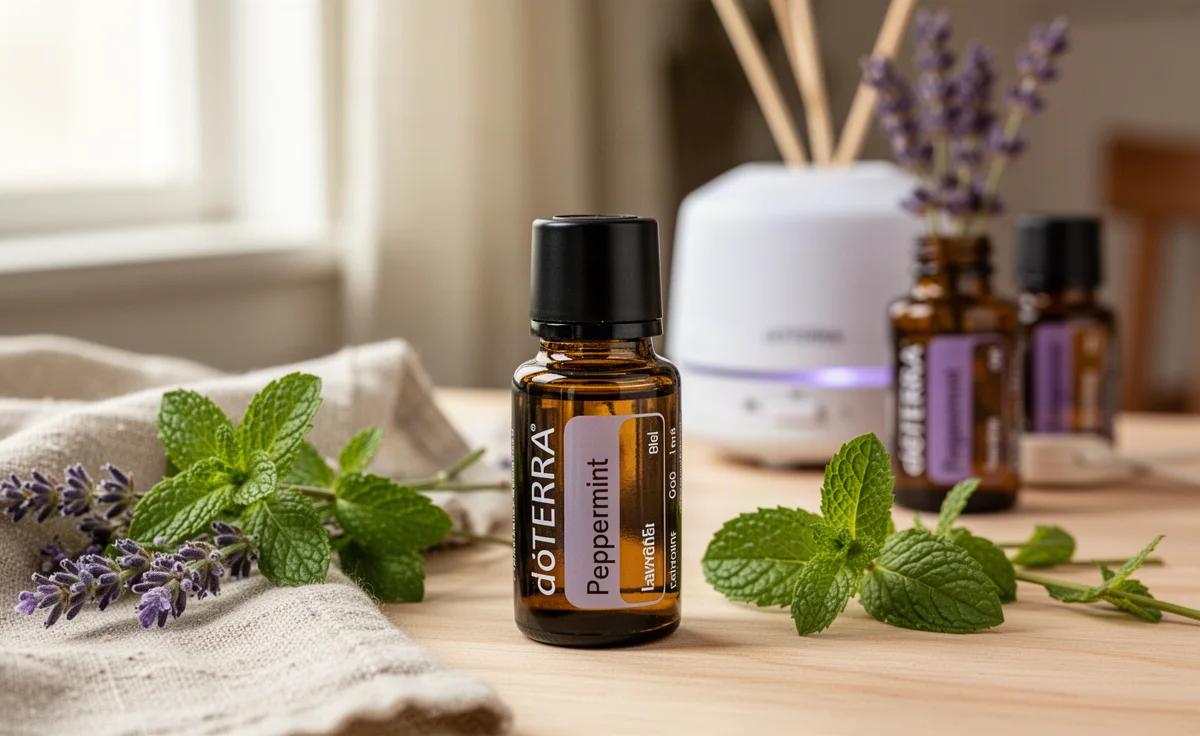
By Essential Synergy Team — Wellness Advocates & doTERRA enthusiasts
That dull ache behind your eyes shows up at the worst possible moment, and you want something simple that works without reaching for another pill. Peppermint oil is one of the most popular essential oils for head tension, and for good reason: it has a cooling sensation that feels immediately soothing on the temples and neck. The most common method is to dilute 1-2 drops of peppermint oil in a teaspoon of carrier oil like coconut or jojoba, then massage a small amount onto your temples, forehead, and the back of your neck. You can also inhale it deeply from your palms for a quick pick-me-up. In our experience, consistency with dilution matters more than the exact number of drops, so start slow and see how your skin responds.
Why Peppermint Oil Works for Head Tension
Peppermint oil contains menthol, a naturally occurring compound that creates a cooling sensation when applied to the skin. That cooling feeling can help distract from the discomfort of a tight, tense head and encourages you to relax the muscles in your neck and shoulders, where many headaches begin. Aromatherapy research published in journals indexed on PubMed suggests that inhaled peppermint may support feelings of alertness and ease during periods of tension. While it is not a replacement for medical care, many people keep Peppermint essential oil in their wellness kit as a quick, natural comfort option.
Unlike some oils that need to be diffused for a long time, peppermint works fast when you inhale it directly or apply it topically with a carrier oil. The key is using a quality oil you trust. doTERRA's Peppermint oil is a staple for many households because a single bottle lasts for months when used in small amounts.
Step-by-Step: How to Apply Peppermint Oil for Headaches
Follow this simple routine the next time you feel a headache coming on:
- Wash your hands and make sure the skin on your face and neck is clean and free of other products.
- Dilute 1-2 drops of peppermint oil in about a teaspoon of carrier oil. Good options include fractionated coconut oil, jojoba oil, or sweet almond oil. Never apply undiluted peppermint oil to your face or neck.
- Massage gently into your temples using small circular motions. Use your fingertips and apply only light pressure.
- Rub a little on the back of your neck and across the tops of your shoulders, where tension often builds during long workdays.
- Cup your hands over your nose and inhale slowly for 30-60 seconds, allowing the aroma to settle your breathing.
- Rest quietly for 5-10 minutes in a dim room if possible, letting the cooling sensation and aroma work together.
What we recommend most often is pairing topical application with slow, deliberate breathing. The combination of touch, aroma, and pause can shift how your body responds to stress.
Comparison: Peppermint vs. Other Oils for Head Support
| Oil | Primary Benefit | Best Application | Aroma Profile |
|---|---|---|---|
| Peppermint | Cooling, refreshing | Temples and neck massage | Sharp, minty, invigorating |
| Lavender | Calming, grounding | Inhale or diffuse at bedtime | Soft, floral, relaxing |
| Frankincense | Centering, soothing | Chest or back of neck | Warm, woody, earthy |
| Deep Blue | Comforting for tense areas | Shoulders and upper back | Wintergreen, camphor, cooling |
| PastTense | Blended for head and neck ease | Temples, forehead, neck | Minty, herbal, balancing |
If peppermint alone does not feel like enough, a pre-blended option like PastTense combines peppermint with other oils specifically selected for head and neck comfort. Some people alternate between Peppermint during the day and Lavender in the evening, since lavender leans more toward relaxation.
Three Simple Ways to Use Peppermint Oil
Beyond the temple massage, here are a few other methods that fit easily into daily life:
- Diffuse while you work. Add 3-4 drops of Peppermint to a diffuser in your home office. The steady aroma can help keep your mind sharp during long stretches of screen time.
The "Too Late" Rescue: When the Headache Is Already Full-Blown
If the pain has already settled in, skip the slow routine and go for speed. Place one drop of diluted peppermint on your fingertip and target the bony ridge just behind your earlobes, where the jaw and skull meet. Press gently for 20 seconds on each side. Add a cold, damp washcloth over your forehead while you cup a single drop (undiluted is fine here since it's not touching skin) under your nose for three slow inhales. For many people, this combination—cool compress, menthol vapor, and acupressure—breaks the cycle faster than temple massage alone.
The Mistake That Ruins Relief: Using It Before or After a Hot Shower
Peppermint oil and heat don't mix well. Applying it before a hot shower or steam session can cause the oil to spread, sting your eyes, or make the cooling sensation turn into an intense, uncomfortable burn. And if you shower first and immediately apply the oil, your freshly opened pores can absorb it too quickly, leading to redness or a throbbing pulse. Wait at least 15 minutes after a shower—or better yet, skip the shower and use a cold compress. For the same reason, never apply peppermint oil before a workout or sauna session.
Stacking It With a Hydration Reset
Headaches often have two culprits at once: tension and dehydration. Before you even reach for the bottle, drink 8–12 ounces of room-temperature water with a pinch of sea salt. Then apply the peppermint oil as usual. The salt helps your body hold the water, and the oil's cooling sensation works better when your cells aren't already strained. Keep a small spray bottle with diluted peppermint (5 drops in 2 ounces of water) in your desk drawer—two spritzes on the back of your neck while you rehydrate can prevent the next wave from building.
Related reading
Frequently Asked Questions
How should I apply peppermint oil for a headache?
Dilute 1–2 drops with a carrier oil (like fractionated coconut oil) and massage gently onto your temples, forehead, or back of the neck. Avoid contact with eyes and broken skin.
Can I use peppermint oil if I have sensitive skin?
Yes, but always do a patch test on your inner arm first, and use a higher dilution ratio (e.g., 1 drop per teaspoon of carrier oil) to reduce irritation risk.
How often can I reapply peppermint oil for headache relief?
Reapply every 2–3 hours as needed, but stop if you notice any skin redness or discomfort. Do not use continuously for more than a few days without consulting a healthcare professional.
This content is for general information only and is not medical advice. Essential oils are not intended to diagnose, treat, cure, or prevent any disease; consult a qualified healthcare professional before use.