Peppermint Oil for Headaches, What Actually Works
Learn how peppermint oil helps with tension headaches, the right dilution, where to apply it, and what to avoid. Practical guidance from wellness advocates.
By Essential Synergy Team — Wellness Advocates & doTERRA enthusiasts
A dull ache settles behind your eyebrows around 3 p.m., and the first thing you reach for is the bottle on your desk. The short answer: yes, peppermint oil is one of the most practical natural options for tension-type headaches. A small study published in the medical literature found that applying diluted peppermint oil to the temples and forehead reduced headache intensity in many participants, comparable in some cases to standard over-the-counter pain relievers. That said, it works best for tension headaches, not migraines, and it needs proper dilution. In this guide, we cover how to use peppermint oil safely, where to apply it, what dilution to use, and when to skip it entirely. You will also see how it compares to a few other doTERRA oils we use in our own routines.
Why Peppermint Oil Helps with Tension Headaches
Peppermint essential oil is steam-distilled from the leaves of Mentha x piperita. Its high menthol content gives it the cooling sensation you feel on skin. That cooling effect is not just pleasant: it appears to influence how the brain interprets pain signals, especially in tension headaches that stem from muscle tightness in the neck, shoulders, and scalp.
Research published in journals indexed on PubMed suggests that topical peppermint oil can reduce headache symptoms when applied to the forehead and temples. Most of the evidence focuses on tension-type headaches rather than migraines with aura. In our experience, it works fastest when you catch the headache early. Once a full migraine sets in with light sensitivity and nausea, peppermint oil is rarely enough on its own.
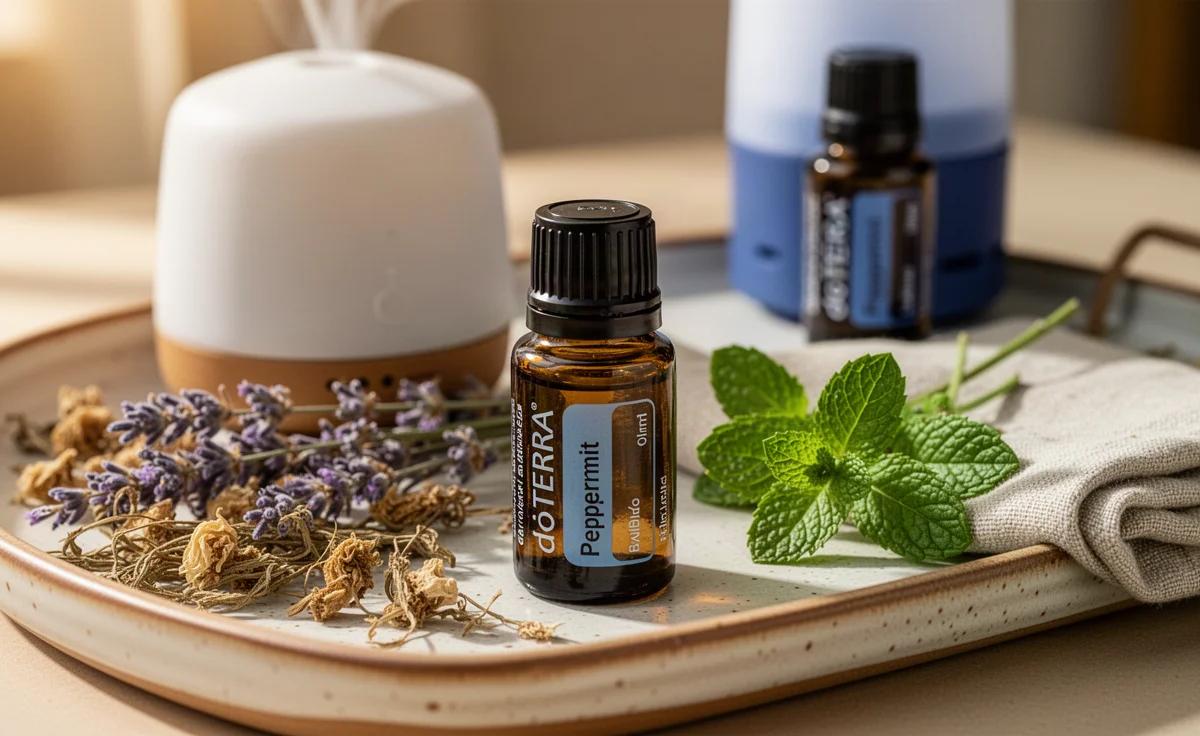
What we like about Peppermint from doTERRA is the consistent scent and cooling strength. A lower-quality peppermint oil can smell more like candy than the crisp, green leaf you want.
How to Use Peppermint Oil for Headaches
Dilution matters more here than with almost any other oil, because you are applying near the eyes and on thin skin. Use 2-3% dilution for adults: that means 2-3 drops of peppermint oil per 5 ml (one teaspoon) of carrier oil. Jojoba works well on the face because it is a liquid wax that does not clog pores or go rancid. Fractionated coconut oil is another good option.
Follow these steps:
- Mix 2 drops of Peppermint with 5 ml of jojoba or fractionated coconut oil in a small glass dish.
- Do a patch test on the inner elbow and wait 24 hours if this is your first time using the oil.
- Using clean fingertips, apply a small amount to your temples, the base of your skull, and across your forehead.
- Keep it away from your eyes. If it gets too close, flush with a carrier oil, not water.
- Reapply once after 30 minutes if needed. Do not exceed two applications in a three-hour window.
Avoid peppermint oil around children under two. The menthol can be too strong near their faces.
Peppermint Oil vs. Other Options for Headaches
Peppermint is not the only oil worth trying. Here is how it compares to a few other common choices in our kit:
| Oil | Best For | Cooling Effect | Key Note |
|---|---|---|---|
| Peppermint | Tension headaches | Strong | Dilute at 2-3%, avoid eyes |
| Lavender | Stress-related head tension, relaxation | None | Gentler, good for evening use |
| PastTense | Tension in neck and shoulders | Mild | Pre-blended roll-on, convenient |
| Deep Blue | Muscular neck tightness | Mild | Use on neck and shoulders, not forehead |
| Basil | Mental fatigue with head tension | None | Use diluted, earthy scent |
Lavender deserves a special mention. We have found that a 1% dilution of lavender at the hairline before bed helps when head tension is tied to a stressful day. It lacks the cooling punch of peppermint, but it is far gentler and works well in combination. Some people alternate: peppermint during the day, lavender at night.
For neck and shoulder tightness that triggers headaches, Deep Blue applied to the upper trapezius muscles can be more useful than peppermint on the forehead. The two work on different parts of the same problem.
What to Avoid
You cannot apply undiluted peppermint oil to your temples. The skin there is thin, and a 100% concentration can cause irritation that feels worse than the original headache. Also, never put peppermint oil near the eyes or on broken skin.
If you are prone to headaches triggered by strong scents, diffusion is not your friend. A diffuser running peppermint for 45 minutes can provoke the exact problem you are trying to solve. In that case, stick to skin application at the 2% dilution, or skip peppermint altogether.
Frequently Asked Questions
Does peppermint oil help with headaches? Many people enjoy peppermint oil for its cooling, refreshing aroma and choose to use it as part of their personal relaxation routine. Individual experiences vary, so it is best to see what works for you.
How do you use peppermint oil for headaches? A common approach is to dilute a drop or two with a carrier oil and gently massage it into the temples and forehead, or simply inhale the aroma from the bottle. Avoid contact with the eyes, and test on a small area of skin first.
Can I use peppermint oil on my skin undiluted? Peppermint oil is potent and is generally best applied diluted with a carrier oil such as fractionated coconut oil, especially for sensitive skin. If you have any health concerns, consult a qualified healthcare professional before use.
This content is for general information only and is not medical advice. Essential oils are not intended to diagnose, treat, cure, or prevent any disease; consult a qualified healthcare professional before use.