Calming Essential Oil Blend for Rest and Worry
Discover how doTERRA lavender oil supports evening relaxation and calmer days. Learn safe dilution, diffusion timing, and simple rituals that work.
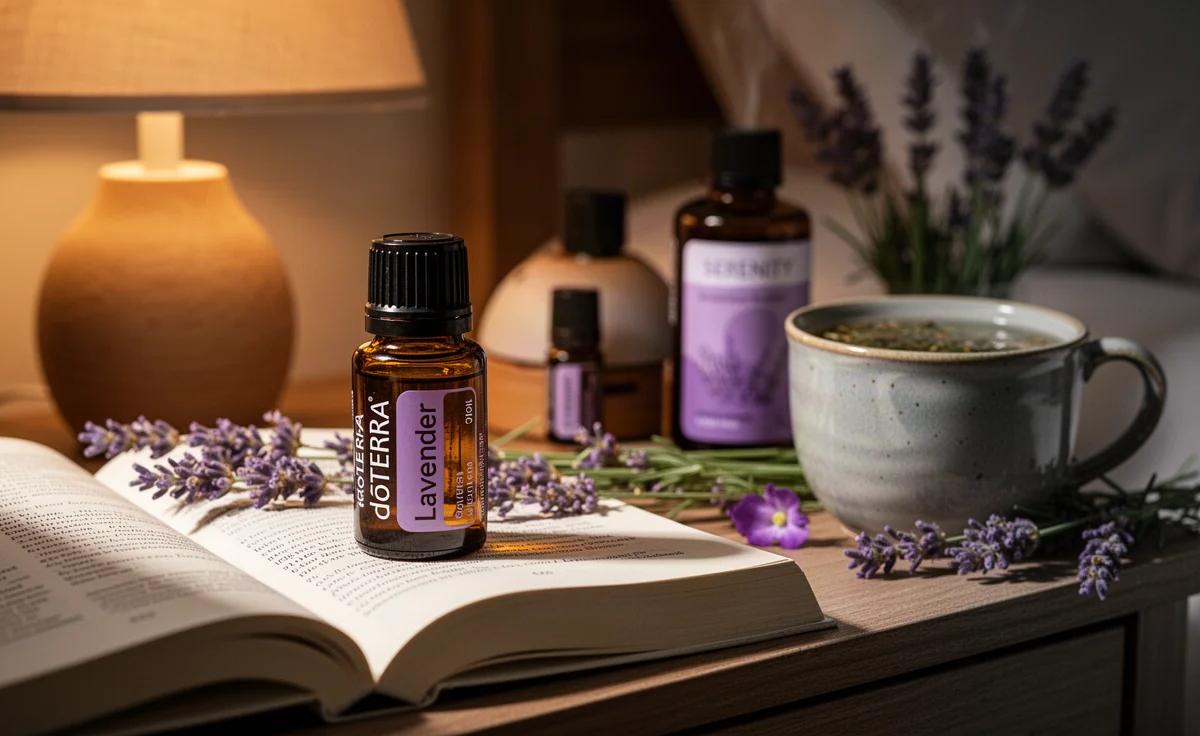
By Essential Synergy Team — Wellness Advocates & doTERRA enthusiasts
You have probably heard someone say lavender helps them wind down, but nobody explains what that actually looks like in a real evening. Here is the direct answer: doTERRA lavender oil works best as a repeated evening cue, not a one-time fix. Diffuse 3-4 drops in 100 ml of water for 30-45 minutes before bed, or apply a 1% dilution (1 drop in 5 ml of carrier oil) to your wrists and temples. The value comes from pairing the scent with the same quiet sequence night after night, so your brain starts associating it with slowing down. We recommend the Lavender oil as the foundation, but blends like Serenity and Balance can extend the ritual in useful ways.
What Makes doTERRA Lavender Different
Not all lavender oils behave the same way. The key detail is the species. doTERRA uses Lavandula angustifolia, the sweet, floral variety most people find calming. Its close relative, Lavandula latifolia, smells sharper and carries a much higher camphor note that feels more stimulating than soothing. The difference matters when you are choosing an oil for evening use.
Beyond the species, doTERRA applies its Certified Pure Tested Grade standard, which is the company's own testing and purity protocol. In practical terms, that means the oil in the bottle is consistent from one order to the next, so your evening ritual does not change character because a batch smells different. If you already keep a small collection of single oils at home, you might also compare it with Roman Chamomile, which is softer and works well for people who find lavender a bit too floral.
A Simple Evening Ritual That Actually Sticks
The ritual is more important than the oil itself. A single drop on your pillow without any other change rarely does much, because there is no association built. What we recommend most often is a short, repeatable sequence.
- About 45 minutes before bed, put 3-4 drops of Lavender into your diffuser with 100 ml of water.
- Run the diffuser for 30-45 minutes only, then turn it off. Continuous diffusion saturates the nose and stops registering after a few minutes anyway.
- While it runs, do one quiet thing: dim the lights, set your phone aside, or read a few pages.
- Turn the diffuser off and keep the room cool and dark.
That is the whole routine. It takes less than an hour and costs almost nothing in effort once it becomes automatic.
Ways to Use Lavender for Calmer Days
Lavender is not only a nighttime oil. The same grounding quality works during the day, when tension shows up at your desk or in traffic.
| Method | Dilution | Timing | Best For |
|---|---|---|---|
| Diffusion | 3-4 drops per 100 ml water | 30-45 min sessions | Room atmosphere, evening wind-down |
| Wrist roll-on | 1% (1 drop per 5 ml carrier) | As needed, max 2-3 times daily | Daytime stress moments |
| Body massage | 2% (2 drops per 5 ml carrier) | Evening, after shower | Full-body relaxation |
| Bath blend | 3 drops mixed in carrier first | 15-20 min soak | Weekly reset |
For skin application, always dilute. Lavender is gentle, but undiluted essential oils can still irritate. A 1% blend for your face or wrists uses 1 drop in 5 ml of carrier, and Copaiba mixes beautifully with lavender for a softer, rounder scent when you want something less floral.
When the goal is specifically restful sleep, you may find better results by rotating lavender with Vetiver or Cedarwood, two heavier base notes that anchor a blend. We explored this in more detail in our guide to the best essential oils for sleep and anxiety, where lavender appears alongside several complementary options.
Avoiding the Two Most Common Mistakes
First, most people diffuse too long. The nose adapts within minutes, and a humid room full of oil vapor can become irritating rather than relaxing. Half an hour is enough.
Second, they expect one drop to override a loud, bright, overstimulated evening. No oil reliably outweighs a phone at full brightness and a racing to-do list. The essential oil sets the atmosphere, but the environment still has to cooperate.
Making the Scent Cue Travel With You
If lavender already helps you unwind at home, the natural next step is giving your brain the same signal in less ideal places. A small dram bottle with a 1% pre-diluted blend fits in a purse or desk drawer, and one swipe on the inside of the wrist before a stressful meeting or a long drive recreates the association you built on your pillow. The trick is consistency of scent, not quantity: two drops of the same blend, from the same bottle, so your nervous system recognizes it instantly. Pair that swipe with one slow breath cycle, four counts in and six counts out, and you have a portable version of your evening cue. People who skip this step often report that lavender "only works at home," when the real issue is that they never taught their brain the daytime version of the same signal.
Mistakes That Quietly Undo Your Results
A few small habits can stall progress without you noticing. Wearing a strong perfume or scented lotion during the day masks the subtle lavender note, so your cue never fully registers, and switching brands or species every week means your brain is learning a new scent each time instead of reinforcing one. Storing the bottle on a sunny windowsill is another quiet problem, since light and heat degrade the oil and the scent drifts, which weakens the association you worked to build. Keep it in a cool, dark drawer or cabinet, and if the aroma starts smelling flat or sharp rather than soft and floral, replace it. Finally, avoid layering lavender with eucalyptus or peppermint in the same diffuser session when your goal is rest, because those brighter notes pull the blend in a stimulating direction, undoing the calming effect you are after.
Related reading
- doTERRA Lavender Oil for Anxiety and Stress Relief
- doTERRA DigestZen Oil Review for Digestive Support
- Calming Effects of doTERRA Lavender for Restless Nights
Frequently Asked Questions
How do I use doTERRA lavender oil? It is commonly used aromatically in a diffuser or applied topically after dilution with a carrier oil. Follow the label directions and your own preferences.
Can I apply lavender oil directly to my skin? Many people dilute it with a carrier oil such as fractionated coconut oil before applying it topically. If you have sensitive skin, do a small patch test first.
Where can I learn more about doTERRA lavender oil? Your doTERRA affiliate or the official product page can provide usage instructions and details. You can also ask them about current product information.
This content is for general information only and is not medical advice. Essential oils are not intended to diagnose, treat, cure, or prevent any disease; consult a qualified healthcare professional before use.