Peppermint Oil vs Eucalyptus Oil for Congestion
Peppermint or eucalyptus? Compare their scent, how each feels in a steam or diffuser routine when you feel stuffy, and how to use both safely.
By Essential Synergy Team — Wellness Advocates & doTERRA enthusiasts
You are standing in front of your essential oil shelf, stuffy nose, foggy head, and two bottles are staring back at you: peppermint and eucalyptus. Which one actually helps you breathe easier right now?
The direct answer is this: for sinus and chest congestion, eucalyptus oil is usually the better first choice, because its main component, 1,8-cineole, is widely studied for its clearing effect on airways and its ability to help loosen mucus. Peppermint oil works more through the cooling sensation of menthol, which makes it feel like your airways are opening even when airflow itself has not changed much. In practice, many people keep both on hand and match the oil to the moment. Here is how they actually compare.
How They Work Differently
Eucalyptus oil, specifically the species Eucalyptus globulus or Eucalyptus radiata, contains a high percentage of 1,8-cineole. When you inhale it, that compound interacts with the lining of your nasal passages and upper airways in a way that feels clearing and opening. Research published in peer-reviewed journals has examined 1,8-cineole for its role in reducing cough frequency and improving the sensation of easy breathing, particularly in steam inhalation contexts.
Peppermint oil, from Mentha piperita, leans on menthol. Menthol does not physically open your airways. Instead, it activates cold-sensitive receptors in your nose and throat, which sends a signal to your brain that reads as "cool air moving through." That is why peppermint feels so immediate, even though the underlying congestion may be unchanged. It is a sensation shift, not a structural one, and that matters when you are choosing between them.
Comparison Table: Eucalyptus vs Peppermint for Congestion
| Criteria | Eucalyptus Oil | Peppermint Oil |
|---|---|---|
| Primary active compound | 1,8-cineole | Menthol |
| Main action on congestion | Helps loosen and move mucus | Creates a cooling sensation that feels like opening |
| Best use case | Wet cough, thick mucus, chest congestion | Stuffy nose, sinus pressure, that "blocked" feeling |
| Speed of perceived relief | Gradual, builds over 10-20 minutes | Fast, almost immediate |
| Steam inhalation | Excellent | Good, but can feel intense |
| Cautions | Keep away from small children's faces | Avoid near the face of children under 6 |
| Aroma profile | Sharp, medicinal, camphor-like | Fresh, minty, familiar |
Which One to Choose, Based on Your Symptoms
Not every congested nose is the same, and this is where the choice gets practical.
Choose eucalyptus oil when: your chest feels heavy, you have a wet or productive cough, mucus feels thick and stuck, or you want something gentler for ongoing use in a diffuser. Eucalyptus is also the better starting point for steam inhalation, since it tolerates the warm, moist air well without becoming overpowering.
Choose peppermint oil when: your nose is fully blocked and you want fast, noticeable relief, sinus pressure is making your head feel full, or you are congested during the day and need something that cuts through the fog without making you drowsy. Peppermint also blends well with lemon oil for a brighter, more energizing diffusion while you work.
Use them together for the worst days. A single drop of each in a bowl of hot water, towel over your head, breathing slowly for 3-5 minutes, covers both the mucus-moving and sensation-refreshing angles. Just keep your eyes closed; both oils can sting if the steam gets too strong.
How to Diffuse Either Oil for Congestion
- Add water to your diffuser up to the fill line, following the manufacturer's instructions.
- Drop in 3-5 drops of eucalyptus oil or peppermint oil per 100 ml of water. Do not exceed this; more oil does not mean more relief, it just saturates the room.
- Run the diffuser for 30-45 minutes, then let the room air out for at least the same amount of time before running it again.
- Position the diffuser a few feet away from where you are resting or working, never directly beside your face.
- For targeted steam inhalation, add 1-2 drops to a bowl of hot (not boiling) water, cover your head and the bowl with a towel, and breathe for 3-5 minutes. Keep your face at least 30 cm from the water's surface.
A steam bowl is intense. If you have never done it before, start with eucalyptus rather than peppermint: the menthol in peppermint can feel overwhelming at close range.
Product Recommendations
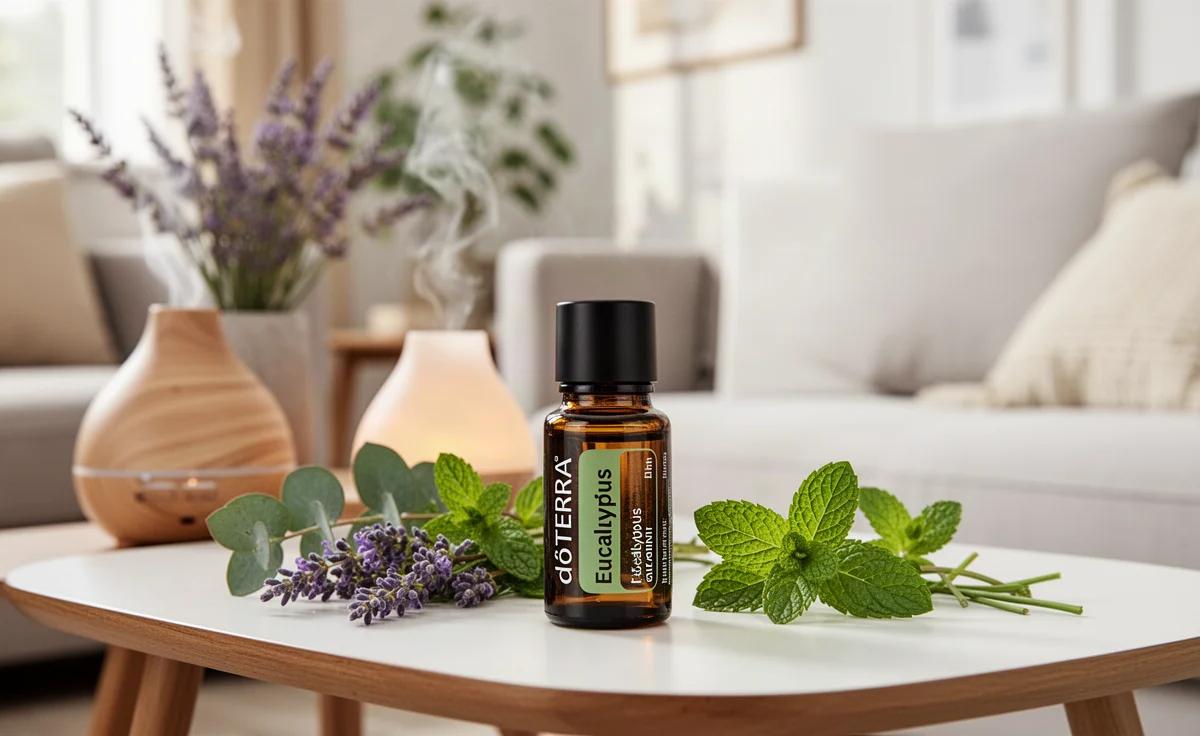
For eucalyptus, we recommend doTERRA's Eucalyptus Oil, which is sourced from Eucalyptus radiata and has a crisp, clean profile that works well in both diffusion and steam. For peppermint, doTERRA's Peppermint Oil is one of their most popular single oils, and it doubles as a useful oil for tension and focus beyond just congestion.
Related reading
Frequently Asked Questions
Can peppermint oil or eucalyptus oil help with congestion? Both oils are often used in aromatherapy and steam inhalation for a refreshing, cooling sensation that some people find soothing when they feel congested. Individual experiences vary, so consider what feels best for you.
How do peppermint oil and eucalyptus oil differ in scent? Peppermint oil has a sharp, cool, minty aroma, while eucalyptus oil is camphor-like, fresh, and slightly woody. Many people prefer one scent over the other, or combine them.
How are these oils typically used? They are commonly diluted with a carrier oil for topical application or added to a diffuser or steam inhalation. Always follow the product label for dilution guidance and avoid contact with eyes and mucous membranes.
This content is for general information only and is not medical advice. Essential oils are not intended to diagnose, treat, cure, or prevent any disease; consult a qualified healthcare professional before use.
Explore doTERRA essential oils · Start your doTERRA wellness routine