doTERRA Lavender vs Geranium Oil for Skin Care
Lavender or geranium for your skin? Compare doTERRA's two gentle florals by skin type, dilution and use, and find out which one fits your routine best.
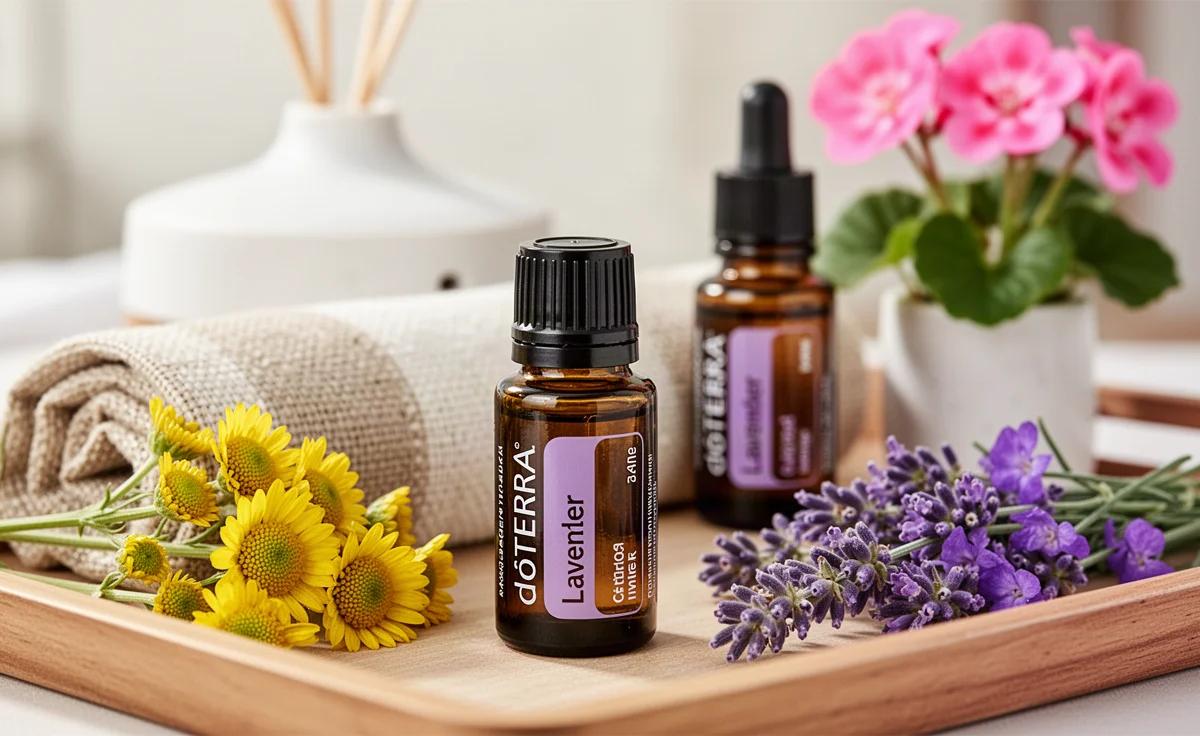
By Essential Synergy Team — Wellness Advocates & doTERRA enthusiasts
You are standing at the shelf with two small amber bottles, wondering which one earns a spot in your evening routine. Choose Lavender if your skin is sensitive, easily irritated, or you want one soothing oil that rarely causes trouble. Choose Geranium if your skin runs oily or combination, or you like a floral, rosy scent in a facial routine. Both go on the face at a 1% dilution, which is roughly 1 drop per 5 ml of carrier oil, and both need a patch test first. If you can only buy one, lavender is the safer all-rounder. Geranium is the more specialized pick.
Lavender vs Geranium at a Glance
| Criteria | Lavender | Geranium |
|---|---|---|
| Best skin type | Sensitive, dry, reactive | Oily, combination, mature |
| Scent | Herbal, soft, familiar | Rosy, green, sweet |
| Facial dilution | 1% (1 drop per 5 ml) | 1% (1 drop per 5 ml) |
| Body dilution | 2-3% | 2-3% |
| Patch-test risk | Low for most people | Slightly higher, can bother very reactive skin |
| Bonus use | Pillow and bedtime routine | Mood-lifting floral blends |
| Weakness | Scent can feel "grandmotherly" | Not ideal for very sensitive skin |
The table points to a simple rule. Lavender wins on tolerance. Geranium wins when your goal is a balanced, fresh-feeling complexion.
Where Each Oil Falls Short
Lavender is not magic. The oil is not a moisturizer, and it will not clear breakouts. Its job is a calm, comforting finish to a routine, and some people simply dislike the smell on their face all night.
Geranium has a different weak spot. It can bother skin that is already inflamed, so it is a poor first choice if your cheeks flush easily. It also costs more per bottle than lavender, and its rosy scent is polarizing.
One more honest point: essential oils are not plant oils. Neither one hydrates or nourishes the skin on its own. They always need a carrier such as jojoba, which is a liquid wax that sits comfortably on the face and does not clog pores.
Which One Should You Choose?
Choose lavender if:
- Your skin reacts to new products.
- You want something for both face and pillow.
- You are new to essential oils.
Choose geranium if:
- Your T-zone gets shiny by afternoon.
- You enjoy floral scents and want your routine to feel like a small treat.
- Your skin tolerates new products well.
For a deeper look at how lavender stacks up against another popular skin oil, see our honest comparison with tea tree.
How to Use Either Oil on Your Skin
- Do a patch test: apply one diluted drop to your inner elbow and wait 24 hours.
- Mix 1 drop of oil into 5 ml of jojoba for the face. Use 2-3 drops per 5 ml for the body.
- Apply a thin layer to clean skin in the evening.
- Skip the eye area and any broken skin.
- Store the bottle in dark glass away from heat and light.
Neither oil is a citrus, so you do not face the sun-sensitivity issue that comes with bergamot, lemon or Lime. Still, keep applications to the evening if you are new to a product.
If lavender is your starting point, it helps to know exactly what you are buying. We explain that in lavender oil vs doTERRA lavender.
Common Mistakes to Avoid With Either Oil
Drop counting is where most routines go wrong. A "drop" of geranium from a fast-flowing bottle can be larger than one from a thick lavender bottle, so measure into a spoon or a small dish before blending rather than squeezing directly onto your palm. Never add essential oil to a serum or cream that already contains active ingredients like retinol or strong acids, since the combination makes it harder to tell which product is causing redness. And do not judge either oil after a single night. Give a diluted blend two to three weeks of consistent evening use before deciding whether it suits your skin.
Building a Simple Weeknight Routine
If your skin is reactive, start with lavender two nights a week and build up slowly. If your skin is oilier, use geranium on alternate evenings. A workable pattern looks like this: cleanse, apply your hydrating serum if you use one, then press three or four drops of the diluted oil blend over your face with your palms instead of rubbing. On the nights you skip the oil, your usual moisturizer takes over. Keep a small written note of which oil you used and how your skin looked the next morning, because memory blurs after a week or two.
Getting More From a Single Bottle
A 5 ml blend of jojoba with one drop of either oil lasts about two weeks of nightly use, so decant only what you need and mix fresh rather than doubling the recipe. If the rosy scent of geranium feels heavy on your face, use it on your wrists and neck instead and keep lavender for the face. When a blend starts to smell flat or sharp, discard it and mix a new batch.
FAQ
Can I mix lavender and geranium together? Yes. The two blend well, and a combined 1% dilution (half a drop of each per 5 ml, or 1 drop of one oil plus a patch test of the pair) gives a softer, rounder scent. Patch test the mixture before using it on your face.
Which oil is better for oily skin? Geranium is the traditional choice for oily or combination skin. Treat it as part of a balanced routine, not a treatment for breakouts.
Is it safe to use these oils during pregnancy? Talk to your doctor or midwife before using any essential oil on your skin while pregnant or breastfeeding. The decision is individual and clinical.
Can I use them on children? Under 2 years, do not apply essential oils to the skin without pediatric guidance. For older children, stay at 1% and patch test first.
Conclusion
Lavender is the gentle default for most people, while geranium suits oilier skin and anyone who loves a floral scent. Pick the one that matches your skin type, dilute it properly, and give it a few weeks in your routine.
See Lavender in the doTERRA shop
This content is for general information only and is not medical advice. Essential oils are not intended to diagnose, treat, cure, or prevent any disease; consult a qualified healthcare professional before use.