Lavender Oil vs doTERRA Lavender, What’s the Difference?
Discover why doTERRA Lavender oil stands apart from generic lavender oils. We compare purity, sourcing, testing, and real-world quality so you can choose with confidence.
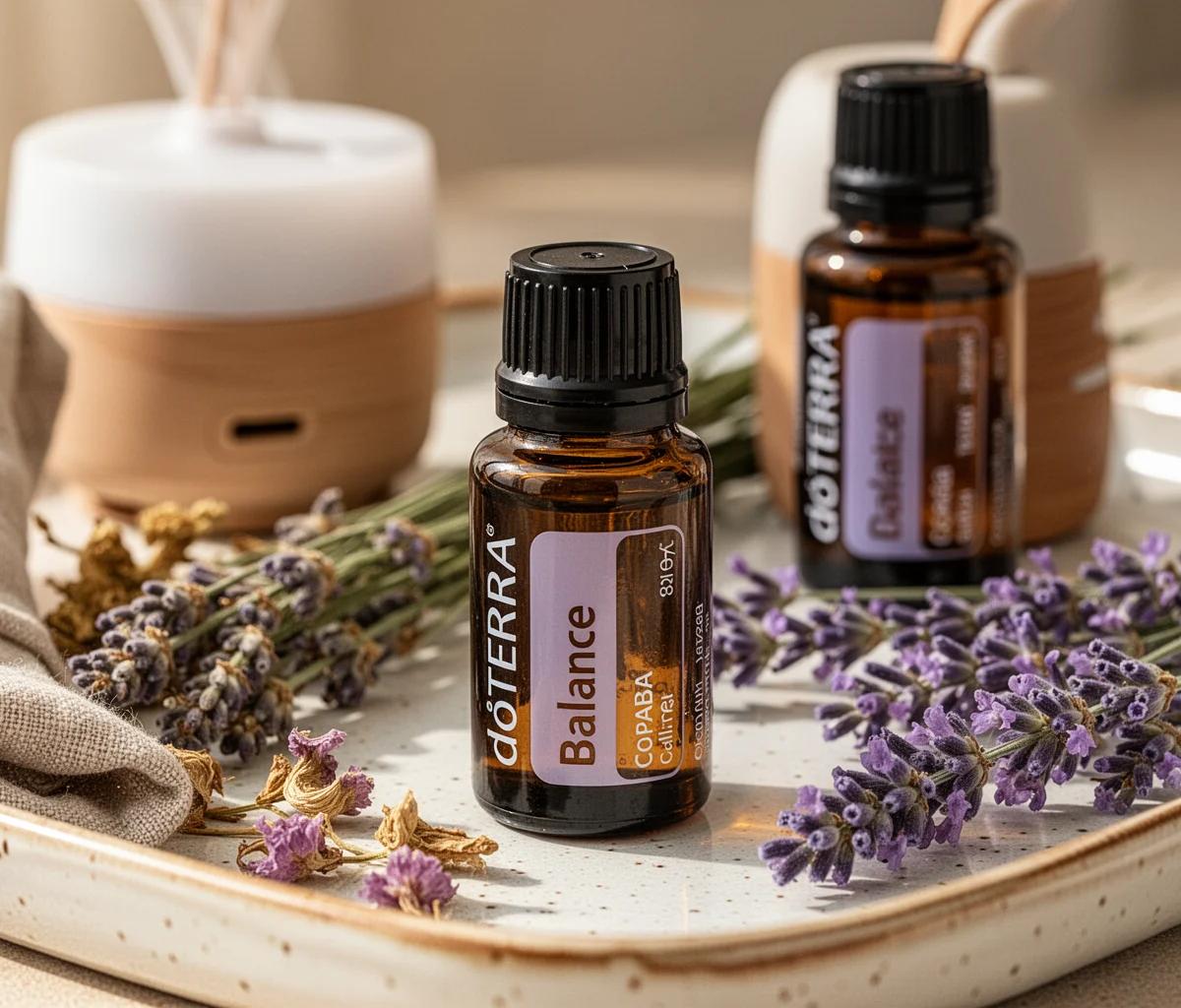
By Essential Synergy Team — Wellness Advocates & doTERRA enthusiasts
You open two bottles of lavender oil and they both smell floral and herbaceous. One costs three times as much as the other. The shop assistant says they’re “basically the same.” Are they? The short answer is no, doTERRA Lavender and a generic lavender oil are not interchangeable products, and the differences go far deeper than the label. doTERRA tests every batch for purity and potency through a rigorous internal standard called Certified Pure Tested Grade, sources lavender from specific growing regions where the plant thrives naturally, and distills at precise low-heat, low-pressure settings to protect delicate aromatic compounds. A typical drugstore lavender oil may be cut with synthetic linalool or linalyl acetate to boost the scent, or it may come from a hybrid plant bred for higher yield rather than aromatic richness. In this article we walk through what sets doTERRA Lavender apart across sourcing, chemistry, testing, and everyday use, so you feel confident about what you’re putting on your skin, in your diffuser, and around your family.
The Source Matters: Where Lavender Grows
Lavender is not one single, uniform plant. The species used in doTERRA Lavender is Lavandula angustifolia, often called true lavender or English lavender, grown at high elevations where cool nights and warm days encourage the plant to produce a broad spectrum of linalool, linalyl acetate, and subtle supporting compounds. doTERRA sources its lavender primarily from Bulgaria and France, regions with generations of lavender-growing heritage. The plants are harvested at peak bloom in the morning, then distilled promptly to capture the freshest aromatic profile.
By contrast, many inexpensive lavender oils use Lavandula x intermedia (lavandin), a hardy hybrid that produces more oil per hectare but delivers a sharper, more camphoraceous scent. Lavandin works well in industrial cleaning products, but it lacks the gentle, rounded character that makes doTERRA Lavender a go-to for evening relaxation, skin soothing, and family-friendly diffusion. When you reach for a bottle labelled simply “lavender oil,” you rarely know which species you’re getting, where it was grown, or how it was processed.
Testing and Purity: Why It’s the Core Distinction
| Aspect | Generic Lavender Oil | doTERRA Lavender |
|---|---|---|
| Species | Often Lavandin (L. x intermedia) or unstated | Lavandula angustifolia, verified |
| Purity testing | Rarely disclosed; may meet basic GC-MS only | CPTG protocol: GC-MS, FTIR, microbial, heavy metals, organoleptic |
| Additives | May contain synthetic linalool, carrier oils | No fillers, synthetics, or adulterants |
| Sourcing transparency | Typically anonymous supply chains | Co-impact sourcing: known growers, long-term partnerships |
| Distillation | High heat, high pressure for maximum yield | Low heat, low pressure, appropriate time to protect constituents |
This table highlights why a third-party certificate or a single GC-MS report rarely tells the full story. doTERRA’s CPTG testing protocol involves multiple rounds performed by internal and external labs: gas chromatography–mass spectrometry to create a chemical fingerprint, Fourier-transform infrared spectroscopy to confirm molecular structure, and microbial panels to rule out contamination. Every batch of doTERRA Lavender must pass all checkpoints before it leaves the warehouse.
What we recommend most often, especially for readers new to essential oils, is to pick one oil like Lavender and pay attention to how your body responds. A pure, properly distilled lavender oil feels smooth on the skin, has a complex aroma that evolves over hours in a diffuser, and blends effortlessly with citrus, mint, or wood oils without turning sharp or synthetic. In our experience, this is where the gap between a generic lavender and doTERRA Lavender becomes obvious.
How to Spot Quality Lavender Oil at Home
You can run a few simple observations on any lavender oil you already own. These are not lab-grade tests, but they give you practical clues.
- Smell it straight from the bottle. A pure lavender oil smells round and floral with a soft herbal undertone. If it hits your nose with an aggressive, camphor-like spike and fades fast, it’s likely lavandin or cut with synthetics.
- Place a drop on a white paper towel. After a few hours, a pure lavender oil will evaporate almost completely, leaving at most a faint oily ring. Adulterated oils often leave a greasy yellow residue from added carrier oils.
- Diffuse one drop with Lemon or Bergamot. In our experience, doTERRA Lavender blends seamlessly, adding a sweet floral layer without overpowering the citrus. Lower-quality oils can turn the blend muddy or harsh.
- Try a skin patch test (diluted). Pure lavender is famously gentle when properly diluted with a carrier oil. If a diluted drop feels hot, itchy, or irritating on the inner arm, that’s a red flag for adulterants or aggressive solvent residues.
For an evening relaxation blend that’s simple and effective, pair doTERRA Lavender with doTERRA Balance and Copaiba in the diffuser, the result is grounding, warm, and quietly floral. If sleep is your focus, you can read more about blending lavender into a bedtime routine in our guide on how to use doTERRA Lavender oil for sleep.
Building a Quality-Conscious Oil Collection
Once you experience the difference a carefully sourced lavender makes, you might want to extend that standard across your collection. Several doTERRA oils share the same rigorous sourcing and testing philosophy:
- Frankincense, Sourced from Somalia and distilled from Boswellia carterii resin. Its warm, resinous scent deepens any blend and it became a daily-use staple for our team.
- Roman Chamomile, Distilled from flowers grown in the United States. A whisper-soft, apple-like aroma that pairs beautifully with lavender for children’s bedtime blends.
- Peppermint, Harvested in the Pacific Northwest at peak menthol content. A single drop alongside lavender in a morning shower steamer creates an energizing spa-like atmosphere.
- Geranium, Egyptian-grown Pelargonium graveolens with a green-rosy scent that elevates lavender in skin care and emotional blends.
- Cedarwood, Warm, woody, and sourced from the American Atlas cedar. It anchors lavender beautifully in a diffuser blend for focus or evening wind-down.
Each of these oils follows the same CPTG testing protocol that doTERRA Lavender does, giving you consistency from bottle to bottle. When you stock a wellness cabinet with oils you trust, you stop second-guessing whether your evening routine will actually help you unwind, and you can get straight to enjoying it.
Related reading
FAQ
Is doTERRA Lavender food-grade? doTERRA does not label its essential oils with a simple binary “food-grade” claim because regulations vary by country. What they do provide is a publicly accessible batch report that shows the chemical fingerprint of your specific bottle, so you can see exactly what’s inside.
Why is doTERRA Lavender more expensive than supermarket oils? Price reflects multiple factors: the specific plant species used, the elevation and climate of the growing region, low-heat low-pressure distillation that takes more time and energy but yields a broader chemical profile, and the multi-round CPTG testing protocol. Supermarket oils often use the higher-yield lavandin hybrid and cut production corners to hit a price point.
Can I use doTERRA Lavender directly on my skin? Many people apply doTERRA Lavender to the skin diluted with a carrier oil like fractionated coconut oil. Because purity and lack of adulterants are verified by the CPTG protocol, skin sensitivity is typically low, but dilution is always a wise starting practice, especially on children or sensitive areas.
Does doTERRA add linalool to its lavender oil? No. doTERRA Lavender contains no added synthetic compounds. The linalool and linalyl acetate in the bottle are entirely native to the plant material and preserved through careful distillation.
How long does a bottle of doTERRA Lavender last? When stored upright in a cool, dark place with the cap tightly closed, doTERRA Lavender maintains its aromatic profile for at least two to three years. The CPTG testing also monitors oxidation markers to confirm that what you’re diffusing a year after purchase is still vibrant and complex.
Is doTERRA Lavender safe around pets? Diffusing lavender oil in an open, ventilated space is generally considered safe. For topical use on or near pets, we suggest consulting a veterinarian who is familiar with essential oils, as animal sensitivities vary.
Research on Lavandula angustifolia published in the National Institutes of Health database (available at PubMed) details the plant’s rich ester profile and affirms why low-heat distillation matters for preserving that profile, something doTERRA has operationalised through its sourcing and production philosophy.
Conclusion
Generic lavender oil and doTERRA Lavender share a name but take fundamentally different paths to the bottle. Species selection, grower relationships, distillation parameters, and multi-round lab testing combine to produce an oil that is more complex, more consistent, and more versatile across your daily rituals. Whether you diffuse it before bed, add it to a roller blend, or pair it with oils like Serenity, Breathe, or Adaptiv, knowing what’s inside the glass gives you the freedom to enjoy it without question marks.
This content is for general information only and is not medical advice. Essential oils are not intended to diagnose, treat, cure, or prevent any disease; consult a qualified healthcare professional before use.