Lavender Oil vs Tea Tree Oil Compared Honestly
Lavender oil or tea tree oil: which suits your needs? We compare scent, skin use, safety, and the best pick for sleep, blemishes, and home care.
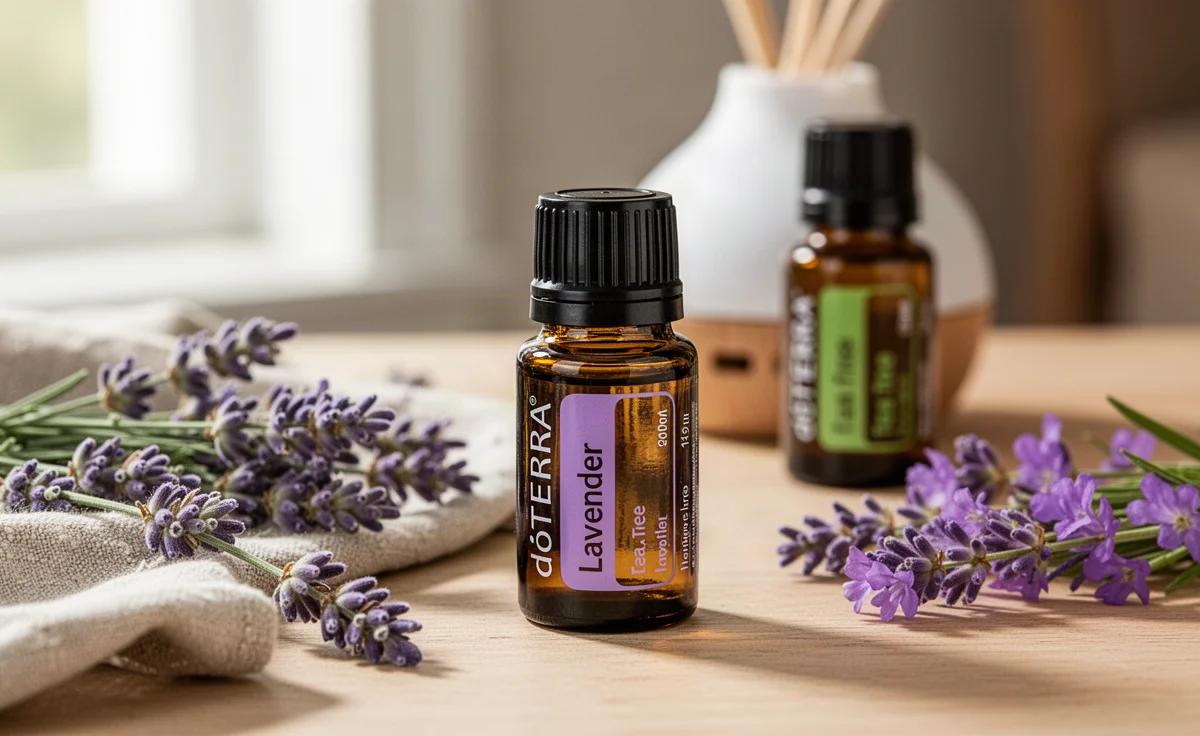
By Essential Synergy Team — Wellness Advocates & doTERRA enthusiasts
You stare at the two bottles, cap off one, then the other. Both smell like something that should work. One calms you instantly. The other smells like a medicine cabinet. If you have to choose, pick Lavender for relaxation, sleep, and gentle skin support. Pick Tea Tree for blemish-prone skin, scalp concerns, and cleaning tasks. They are not interchangeable, and trying to use them that way is where the confusion starts.
What we recommend most often is this: if your goal is calm evenings and softer skin, lavender earns its place first. If your goal is tackling oily skin, occasional blemishes, or a fresher gym bag, tea tree is the workhorse you reach for.
Scent and First Impressions
Lavender (Lavandula angustifolia) opens floral, sweet, and softly herbaceous. It sits easily in a bedroom, a bath, or a linen closet without feeling medicinal. Tea tree (Melaleuca alternifolia) is sharp, camphoraceous, and astringent. Some find it invigorating. Others find it harsh diffused indoors. That difference alone decides the choice for many people.
If you diffuse in shared spaces or around guests, lavender is the safer, more welcoming choice. Tea tree works better in targeted uses, like a cleaning spray or a quick scalp treatment, where the scent fades quickly.
When to Choose Lavender
Lavender supports evening routines without much effort. Use it three ways:
- Diffuse 3-5 drops per 100 ml of water for 30-45 minutes before bed.
- Dilute at 1% (about 1 drop per 5 ml of jojoba or fractionated coconut oil) for gentle facial or neck application.
- Add one drop to a warm, unscented body lotion for a calming post-shower ritual.
It is the oil we suggest first to anyone curious about aromatherapy. The scent is approachable, the skin dilution is straightforward, and it pairs well with Bergamot or Roman Chamomile for a softer blend.
When to Choose Tea Tree
Tea tree works best as a targeted tool. For occasional blemishes, use a 1% dilution (1 drop per 5 ml of jojoba) applied only to the spot with a clean cotton swab. For a scalp refresh, add 2-3 drops to a tablespoon of shampoo in your palm, not the bottle. For home surfaces, combine 5 drops with 100 ml of white vinegar and 100 ml of water in a spray bottle.
One honest drawback: tea tree can feel drying. On sensitive or mature skin, it is rarely a daily-use oil. We reach for it when there is a specific job, not as an ambient scent. If you want a gentler alternative for skin support, Copaiba is milder on the skin.
Side-by-Side Comparison
| Criterion | Lavender | Tea Tree |
|---|---|---|
| Primary use | Relaxation, sleep, gentle skin support | Blemish-prone skin, scalp, cleaning |
| Scent profile | Floral, sweet, calming | Sharp, medicinal, camphoraceous |
| Best dilution (adult skin) | 1% face, 2-3% body | 1% spot use, rarely full-face daily |
| Diffusion appeal | High, blends well | Low, works better in targeted uses |
| Skin sensitivity risk | Low, but always patch test | Moderate, can be drying |
| Key botanical | Lavandula angustifolia | Melaleuca alternifolia |
| Shelf life | 2-3 years typical | 2-3 years typical |
Which One to Choose If...
Choose lavender if you want a bedtime staple, a gentle addition to moisturizer, a welcoming home scent, or support winding down after a demanding day. It is the oil we recommend for first-time buyers and for anyone building a small, versatile collection.
Choose tea tree if you want a focused, occasional-use oil for blemishes, scalp buildup, laundry refresh, or cleaning sprays. It is a functional oil more than a sensory one.
Choose both if your routine has distinct needs. Many people keep lavender by the bed and tea tree in the bathroom cabinet. They serve different moments and rarely overlap.
One thing to keep in mind: both oils are potent. A patch test (one diluted drop in the elbow crease, wait 24 hours) is worth the small effort before first topical use. And if you are curious how lavender compares within the same brand family, this Lavender oil vs doTERRA Lavender article explores purity and sourcing differences.
Related reading
FAQ
Can I mix lavender and tea tree oil together?
Yes, though the scent combination is unusual. A 2:1 ratio of lavender to tea tree, diluted at 1-2% in a carrier oil, works for occasional skin support while softening tea tree's harsh edge.
Frequently Asked Questions
What is the difference between lavender oil and tea tree oil? Lavender oil is steam-distilled from lavender flowers, while tea tree oil comes from the leaves of the tea tree. They differ in aroma, origin, and how they are commonly used in daily routines.
Can I use lavender oil and tea tree oil together? Yes, many people combine them in diffusers or carrier-oil blends. Just follow each product's label directions and dilute appropriately before applying to skin.
Which one should I choose for my home routine? It depends on your preference: lavender oil is often chosen for its soft floral scent, while tea tree oil is valued for its fresh, herbal aroma. You can try both and decide which fits your needs.