Rosemary Oil for Memory and Focus, What to Know
Curious whether rosemary oil can help you stay sharp? Learn how to diffuse it, what research suggests, and which oils pair well for a focused workspace.
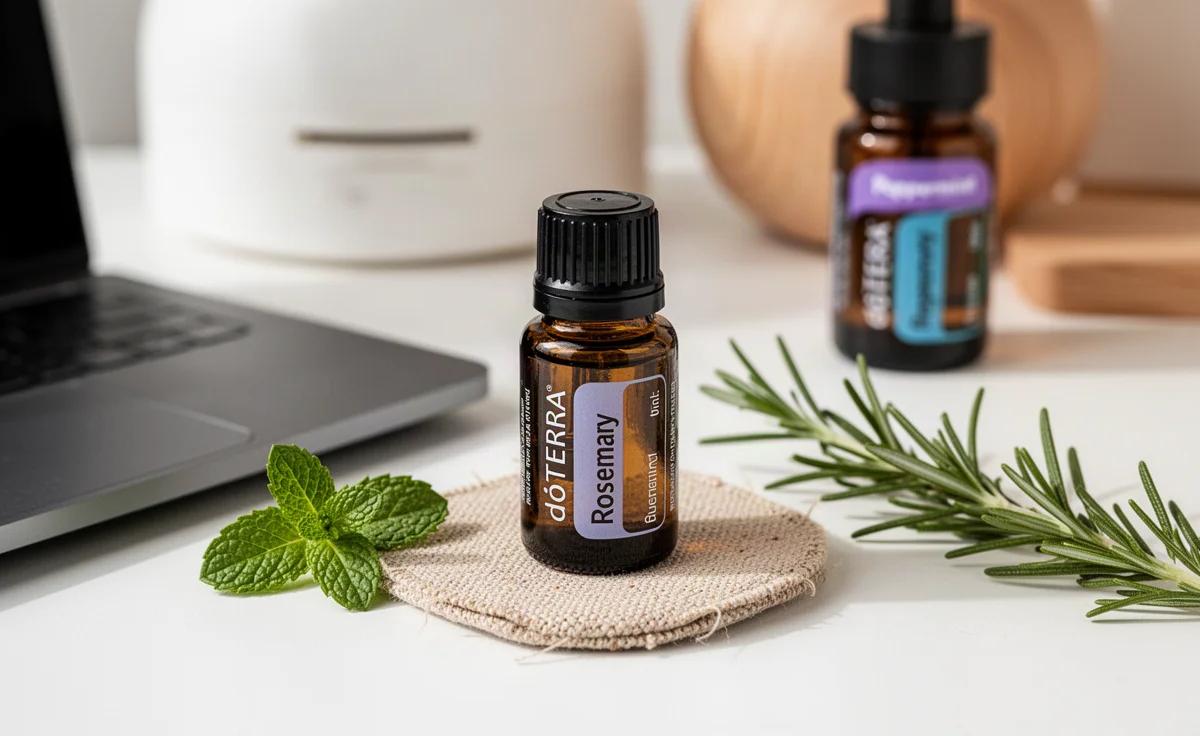
By Essential Synergy Team — Wellness Advocates & doTERRA enthusiasts
You walk into the kitchen and forget why you went there. Sound familiar? That small, universal moment is often what sends people searching for rosemary oil.
Here is the direct answer. Rosemary has been tied to study and remembrance for centuries, and its sharp, herbaceous aroma is popular for creating a focused atmosphere. Modern interest centers on diffusing it while you work or study. Small studies on rosemary aroma have looked at attention and recall in healthy adults, though results are early and rosemary is no substitute for sleep, food, or breaks. The practical approach is simple: diffuse a few drops during short work sessions, notice how you feel, and pair it with good habits. In our experience, it works best as a cue that tells your brain it is time to concentrate.
Why Rosemary Became the "Focus" Oil
The herb's reputation is old. Students in ancient Greece reportedly wore rosemary sprigs while studying, and Shakespeare wrote "rosemary, that's for remembrance." The scent is camphor-like, bright and slightly piney, which many people find wakes up a sleepy room.
Research published in peer-reviewed journals suggests rosemary aroma may influence alertness and mood in some people. You can explore the broader literature through PubMed, but treat findings as encouraging rather than conclusive. Rosemary is a wellness companion, not a cognitive treatment.
How to Use Rosemary Oil at Your Desk
Rosemary is strong, so a light hand wins. The doTERRA Rosemary oil is a common choice for a work or study routine.
Diffusing, step by step:
- Add 3 to 4 drops to a diffuser holding about 100 ml of water.
- Run it for 30 minutes, then switch it off for at least 30 to 45 minutes. Continuous diffusion dulls your sense of smell and adds nothing.
- Keep the room ventilated.
- Pair the scent with one specific task, such as your first deep-work block of the day.
- Repeat for a week and note whether the ritual helps you settle in faster.
Topical use: If you prefer a rollerball, dilute to 1% (about 1 drop per 5 ml of carrier) for the face or sensitive skin, or 2 to 3% (2 to 3 drops per 5 ml) for the neck and shoulders in adults. Fractionated coconut oil is a light, stable choice. Do a patch test on your inner elbow and wait 24 hours before first use.
Rosemary and Its Supporting Cast
Rosemary rarely works alone. Blending softens its edge and shapes the mood of the room.
| Oil | Scent profile | Best for |
|---|---|---|
| Rosemary | Sharp, camphor-herbal | Study sessions, morning work |
| Peppermint | Cool, minty | Mid-afternoon slumps |
| Lemon | Bright, clean | Fresh-start energy |
| Basil | Green, sweet-herbal | Long reading blocks |
| Frankincense | Woody, resinous | Grounding before a big task |
A simple desk blend: 2 drops Rosemary, 2 drops Lemon, and 1 drop Peppermint. If the room feels too intense, drop the peppermint and add a drop of Bergamot for balance. Remember that cold-pressed citrus oils such as Lemon and Bergamot can make skin sensitive to sun, so avoid sunlight on any area where you applied them for about 12 hours.
For more ideas on building a concentration routine, see our guide to essential oils for focus and clear thinking.
Safety Notes Worth Knowing
Rosemary is not for everyone. It is traditionally avoided by people with seizure disorders, and anyone who is pregnant or nursing should check with their doctor or midwife first. Keep it away from young children's faces, and do not use it internally. Under age 2, skip topical oils unless a pediatric professional says otherwise. Store your bottle in dark glass, away from heat and light, with the cap tight.
Build a Scent Cue, Not a Scent Cloud
The biggest mistake people make is treating rosemary like background noise — diffusing it all day until the aroma disappears from awareness entirely. A scent only becomes a focus cue if it is tied to a specific trigger and then removed. Pick one anchor: the moment you open your laptop, the moment you sit down with a textbook, or the start of a 25-minute timer. Diffuse only during that block. After a week or two, the smell itself starts signaling "work mode" before you have consciously decided to settle in.
Common Mistakes That Undermine the Ritual
- Refilling the diffuser mid-session. Topping up keeps the concentration high and flattens your sense of smell; empty it and let the room clear instead.
- Chasing a stronger hit when focus fades. More drops will not rescue a tired brain. Stand up, drink water, and take a real break.
- Diffusing in a sealed room. A closed office with no airflow turns a bright herb into a heavy, headache-inducing haze. Crack a window.
- Using rosemary late at night. Its invigorating character can work against you when you are trying to wind down.
- Expecting it to replace the basics. No aroma compensates for five hours of sleep or a skipped lunch.
A Two-Minute Reset Routine
When concentration slips mid-afternoon, skip the extra drops. Instead, step away from the desk, roll a pre-diluted rosemary rollerball across your wrists, take three slow breaths, and return to one clearly defined task. The oil becomes the bookmark for "back to work," and the pause itself does much of the lifting.
FAQ
Can rosemary oil really improve memory? Some small studies on rosemary aroma have looked at recall and attention, but the evidence is early. Think of it as a pleasant tool that may support a focused atmosphere, not a memory fix.
How many drops of rosemary oil should I diffuse? Start with 3 to 4 drops per 100 ml of water, in 30-minute sessions with breaks between. More drops do not mean more focus and can feel overpowering.
Is rosemary oil safe to apply to my skin? Yes when properly diluted: 1% for the face and sensitive skin, 2 to 3% for the body in adults. Patch test first and wait 24 hours.
What is the best time of day to use it? Most people prefer mornings or early afternoon, since the scent is invigorating. Use it earlier rather than right before bed.
Final Thoughts
Rosemary's clean, bracing aroma makes it a natural fit for desks and study corners. Use it lightly, build a consistent ritual around it, and let good sleep and breaks do the heavy lifting.
This content is for general information only and is not medical advice. Essential oils are not intended to diagnose, treat, cure, or prevent any disease; consult a qualified healthcare professional before use.
Explore doTERRA essential oils