Peppermint Oil Concentration Guide
Discover how peppermint oil concentration affects its potency and safe use. Learn dilution ratios, application methods, and tips for choosing high-quality peppermint essential oil for your wellness routine.
By Essential Synergy Team — Wellness Advocates & doTERRA enthusiasts
You reach for your bottle of peppermint oil, ready to tackle an afternoon slump, but pause: is a single drop too much, or not enough? The question might sound simple, but the answer sits at the heart of using essential oils both safely and effectively. Peppermint oil concentration refers to the strength and chemical potency of the oil itself, but in everyday use, it most often describes how much essential oil you mix into a carrier substance. Undiluted, pure peppermint essential oil is exceptionally potent, and understanding how to harness that potency through measured dilution is what transforms it from an intense sensory experience into a versatile and comfortable wellness companion. The goal is simple: use just enough to unlock its reviving, cooling character while always respecting its power.
Why Concentration Matters with Peppermint Oil
Concentration isn't just a chemistry concern; it is a daily practicality. Pure peppermint essential oil contains high levels of menthol, the natural compound responsible for that almost instant sensation of coolness and refreshment. When used neat, or undiluted, that sensation can veer from invigorating to overwhelming surprisingly fast, sometimes causing skin warmth or sensitivity rather than the comfortable cooling you intended.
What we recommend most often is to think of dilution as unlocking the oil's best behaviour. A properly diluted application still delivers the crisp, clarifying aroma and the soothing, cooling touch that makes peppermint a staple in so many homes. It is the difference between a sharp, fleeting experience and a balanced, sustained effect that you can enjoy throughout your day, whether you are massaging it into tired shoulders after a long walk or inhaling it for a moment of mental clarity.
Beyond comfort, concentration dictates purpose. One ratio might be perfect for a full-body massage blend, but far too mild for a targeted chest rub. A different ratio could support a refreshing foot soak but feel wasteful in a diffuser, which relies on direct inhalation of vapour rather than volume. Tailoring the strength gives you control over the outcome.
The quality of the oil itself also shapes how concentration feels. A highly pure, well-tested oil like doTERRA Peppermint packs a consistent, potent punch, meaning you often need less to achieve a noticeable effect compared to oils of uncertain origin. Consistency from bottle to bottle lets you master your favourite dilutions once and rely on them.
Dilution Ratios: A Practical Guide
Diluting means combining a few drops of essential oil with a carrier oil, such as fractionated coconut oil, jojoba oil, or sweet almond oil. This does not weaken the aromatic benefits; it simply carries them onto your skin in a safe, spreadable, comfortable form.
Below are the most common dilution ratios we use, measured in drops of peppermint essential oil per one tablespoon (roughly 15 ml) of carrier oil. These are starting points for adult use, and you can adjust slightly based on personal preference.
| Dilution Level | Drops per Tablespoon | Best Used For |
|---|---|---|
| Gentle (1%) | 3 drops | Facial care, full-body massage, sensitive skin, daily use |
| Moderate (2%) | 6 drops | Spot application on neck/shoulders, chest rubs, soothing local areas |
| Strong (3%) | 9 drops | Short-term, focused application for very small areas like temples or feet |
| Ultra-Light (0.5%) | 1-2 drops | Bath blends, children over six, elderly, or first-time users |
In our experience, a 1-2% dilution covers almost every daily need beautifully. You can always add one more drop, but you cannot take it away.
Choosing and Using Concentrated Peppermint Oil
Not all peppermint oils are equal, and purity directly impacts how concentration behaves on your skin and in your diffuser. Look for oils that are steam-distilled from the flowering tops of Mentha piperita, which yields a complex profile rich in menthol alongside softer, greener notes. Oils labelled simply as "peppermint fragrance" or those that appear overly thin may be diluted before you even open the bottle, making your own careful measurements less predictable.
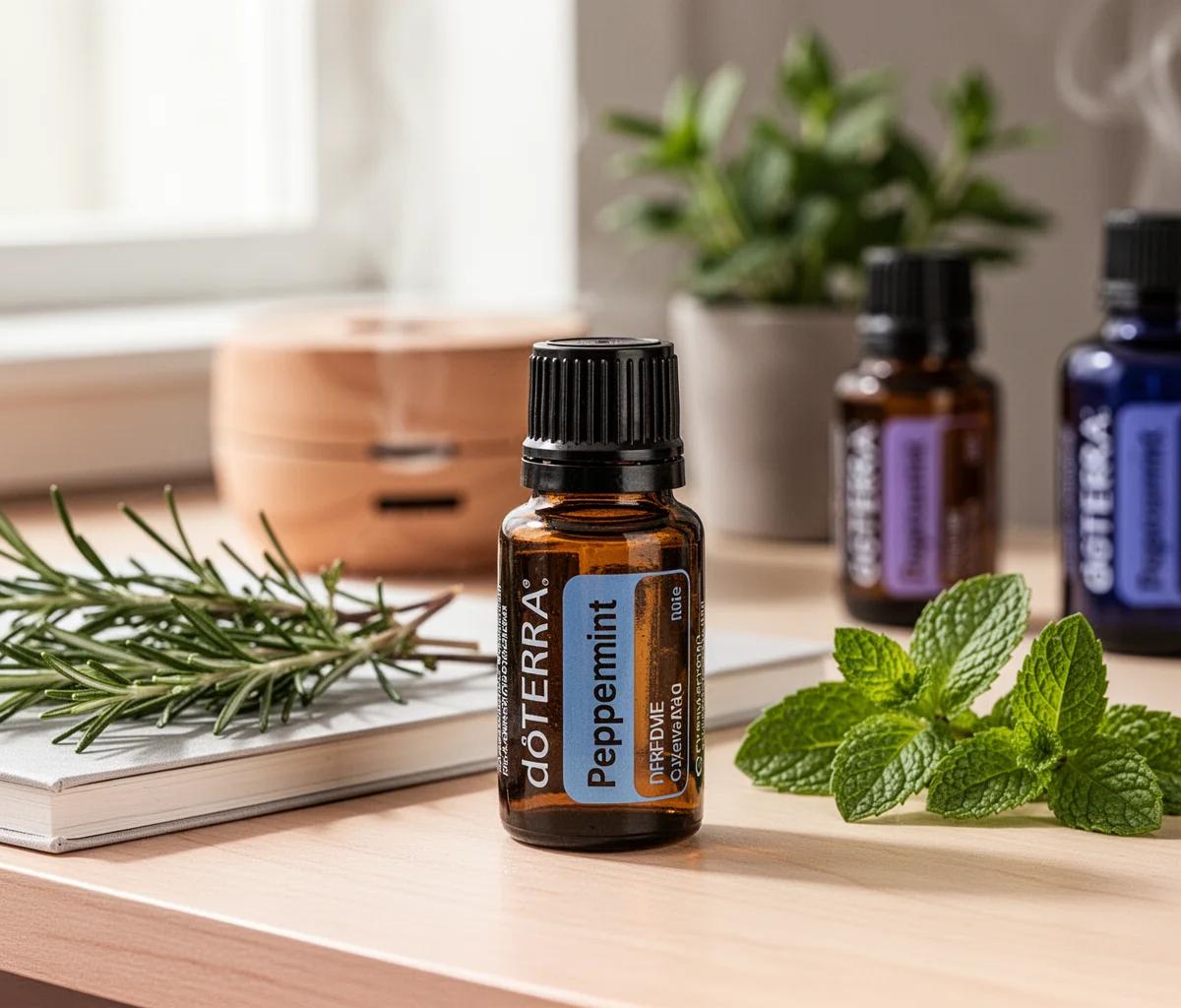
For a pure, crisp option that offers reliable potency, many turn to Peppermint. Its strong menthol content makes a little go a long way. When using such a potent oil, follow these steps for a perfect application every time:
- Start clean: Apply after a warm shower or wash your hands thoroughly before touching your face area.
- Add carrier oil first: Place your measured carrier oil into a clean palm, a small glass dish, or a roller bottle.
- Drop carefully: Tilt the oil bottle at a 45-degree angle. Slow, controlled drops are easier to count.
- Blend gently: Swirl or cap and roll, rather than shaking vigorously, to keep the mixture calm.
- Patch test: Rub a tiny amount on your inner forearm, wait a few minutes, and check for any reaction before using it broadly.
If you are seeking a more rounded, soothing muscle experience after a workout, you might pair or substitute peppermint with a blend like doTERRA Deep Blue, which combines Wintergreen, Camphor, and Blue Tansy specifically for soothing massage. The cooling menthol sensation of peppermint can also work synergistically with oils like Lavender for a balanced, calming chest rub at bedtime, or with Eucalyptus for that classic clean-breathing aroma during seasonal shifts.
For topical support that doesn't involve a bottle and separate carrier, the pre-diluted Deep Blue Touch offers a ready-to-go option, though the aroma is distinct from pure peppermint. Similarly, Breathe makes a powerful diffusion partner, delivering a cool, open-air sensation that teams beautifully with just one drop of peppermint.
Managing concentration also means thinking about the whole person. If you diffuse peppermint in a shared living space, one to two drops in a 100ml water tank is usually plenty so that the intensity doesn't dominate the room. For a revitalising foot bath after a long day, mix one drop of peppermint with a tablespoon of Epsom salt and a squeeze of liquid carrier oil before dispersing in warm water. The salt helps the oil disperse evenly, preventing it from sitting in a concentrated film on the surface. Some oil lovers also keep Rosemary nearby for study sessions, as its herbaceous scent pairs beautifully with peppermint for aromatic focus.
A lesser-known concentration tip: peppermint can brighten your home with more than just fragrance. Add one single drop to a bucket of floor-cleaning water with a dispersing agent like unscented castile soap. The very low concentration is enough to leave a subtle, fresh atmosphere without overwhelming the senses. For doorways and baseboards, you can create a spray by mixing five drops each of Peppermint and Lemon in a cup of water and a teaspoon of soap as a natural refresher.
Related reading
- Peppermint Essential Oil Uses, A Complete Guide
- Peppermint Essential Oil Benefits and Uses
- doTERRA Peppermint Oil Review and Value Breakdown
FAQ
Can I apply peppermint oil undiluted to my skin? You can, but it is rarely a comfortable choice. Neat application dramatically increases the risk of skin sensitivity, irritation, and even a burning sensation, especially with a high-menthol oil. A properly diluted application provides the same cooling sensation in a gentler, more skin-friendly way.
What happens if I add too much peppermint oil to my diffuser? The aroma becomes harsh and can cause eye or throat discomfort, and you may develop a headache from the intensity. Simply turn off the diffuser, open a window, and refresh with a milder blend next time. Less is reliably more with potent oils.
Is peppermint oil concentration the same across all brands? No. Concentration in the bottle depends on farming practices, distillation methods, and plant species. Pure, well-sourced peppermint oil tends to have consistent high potency, while oils that are diluted, rectified, or synthetically altered may smell strong but deliver a thinner, less lasting experience.
How does peppermint concentration affect children? Children have thinner skin and a more sensitive respiratory system, so they require extra-low concentrations. A 0.25-0.5% dilution (approximately 1 drop in two tablespoons of carrier) is generally considered a starting point for kids over six, and diffusing is best done in short bursts well away from their direct breathing space.
Can I mix peppermint with other oils to adjust the intensity? Yes, blending is a wonderful way to soften the sharpness. Lavender, Copaiba, or even a citrus oil like Wild Orange can round out peppermint's profile, creating a more complex aroma while naturally lowering the overall menthol intensity.
Understanding concentration turns peppermint oil from a single powerful note into a tune you can play in a hundred different ways. By welcoming a little measured patience, you give yourself the keys to a cooling, clarifying, and deeply refreshing plant ally that works with your body, not against it.