Natural Sleep Remedies With Aromatherapy
Discover practical aromatherapy routines for better sleep. We compare calming oils, share simple rituals, and answer common questions about natural rest.
By Essential Synergy Team — Wellness Advocates & doTERRA enthusiasts
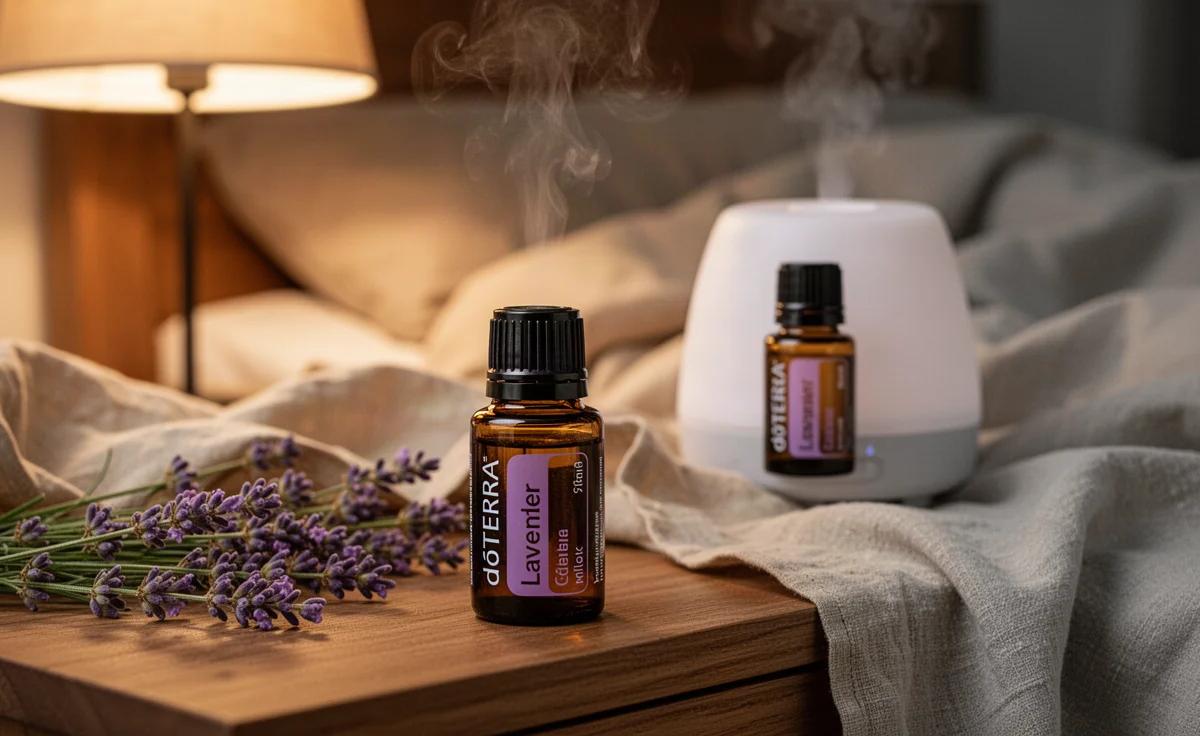
You have tried counting sheep, cutting caffeine, and scrolling less before bed. Yet your mind still races when the lights go out. The direct answer: aromatherapy works best as a repeatable evening ritual, not a one-off fix. The value comes from pairing a consistent scent with a consistent wind-down sequence. Over time, your brain associates that smell with sleep, and drifting off gets easier. The most useful oils for this are Lavender (Lavandula angustifolia, the sweet, classic choice), Roman Chamomile, Cedarwood, Vetiver, and Bergamot in its FCF form. Diffuse 3-5 drops per 100 ml of water for 30-45 minutes before bed, then turn the diffuser off.
Why Ritual Beats Random Usage
A single drop of lavender will not override a stressful day. What helps is repetition. Same scent, same hour, same order of actions: dim the lights, put the phone away, add oil to the diffuser, read a few pages. The brain builds an association between that sensory pattern and winding down. This is classical conditioning, and research published in the National Institutes of Health literature supports the role of learned olfactory cues in relaxation. The oil is a trigger for a state you create with your whole routine.
In our experience, people get the best results when they stop chasing a "stronger" oil and instead protect the ritual. A quiet, consistent 30 minutes with cedarwood beats a chaotic hour with four different blends. Less is genuinely more here.
The Best Oils for Evening Calm
No single oil works for everyone. Here is what we reach for most often and why:
- Lavender (Lavandula angustifolia): the gentle classic; floral, soft, rarely overwhelming.
- Roman Chamomile: delicate and mild, a good option if you find lavender too assertive.
- Cedarwood and Vetiver: heavy base notes that feel grounding and steady.
- Bergamot FCF: citrus but not stimulating; fresh without waking the brain up.
- Serenity: a pre-blended option that combines lavender, cedarwood, vetiver, and other calming notes in one bottle.
What we recommend most often for beginners is a pre-blended option like Serenity, because it removes the guesswork while you build the habit.
| Oil | Profile | Best For |
|---|---|---|
| Lavender (L. angustifolia) | Soft, floral, sweet | Most people; a safe starting point |
| Roman Chamomile | Gentle, apple-like | Those who find lavender too strong |
| Cedarwood + Vetiver | Woody, heavy, grounding | Feeling scattered or unanchored |
| Bergamot FCF | Citrus, clean, calm | Liking citrus without stimulation |
| Serenity blend | Mixed, balanced | Beginners and travel |
A Simple Nightly Routine
Follow these steps, in this order, every evening:
- Set the room: lower the lights, cool the temperature, and move screens out of reach.
- Prepare the diffuser: add water to the fill line, then add 3-5 drops of your chosen oil per 100 ml of water.
- Start the diffuser: run it for 30-45 minutes. Do not leave it running all night; saturated air dulls the scent and adds nothing.
- Do something calm: read a physical book, stretch lightly, or sit quietly. The oil supports this activity, it does not replace it.
- Turn it off: end the diffusion when you actually get into bed. The ritual is done, the association is set.
If you prefer topical use over diffusing, dilute to 1-2% for the body: that is roughly 1-2 drops of essential oil per 5 ml (one teaspoon) of carrier oil. Jojoba works well on the face, while fractionated coconut oil is light and stable for the body. Apply to wrists or the soles of the feet after a patch test. A patch test means one diluted drop on the inner elbow, then waiting 24 hours before broader use.
Common Mistakes That Sabotage the Ritual
The most frequent error is over-oiling. More drops do not mean deeper sleep; they mean a headache and a scent so strong it becomes stimulating. Stick to 3-5 drops per 100 ml and resist topping up mid-evening. Another mistake is switching oils every night. If you want the brain to link a smell to sleep, that smell has to stay the same for at least two weeks. Rotating through five blends is fun but defeats the conditioning. Finally, don't diffuse right next to your head. Place the unit across the room so the scent reaches you gently rather than saturating your pillow.
Making It Travel-Friendly
Rituals break down on the road, which is exactly when you need them most. A small USB diffuser or a cotton ball with two drops of your usual oil in a sealed bag keeps the cue consistent in a hotel room. If you normally diffuse cedarwood at home, take cedarwood, not whatever the hotel gift shop sells. Keeping the scent identical matters more than the delivery method.
When to Adjust Your Approach
If you wake at 3 a.m. and the room still smells strongly of oil, you diffused too long or too close to bedtime. Shorten the session or move it earlier in the evening. If you feel nothing after two weeks of consistent use, the issue is usually the routine around the oil, not the oil itself—review your light exposure and screen habits first.
Frequently Asked Questions
What is aromatherapy? Aromatherapy is the practice of using aromatic plant oils, often through diffusers or topical blends, as part of a personal routine. It is valued for its pleasant scents and calming atmosphere.
How do people use essential oils at bedtime? Many people add a few drops to a diffuser, place a drop on a cotton ball near the bed, or dilute oils in a carrier oil for a gentle massage. Choose whatever fits comfortably into your evening routine.
Which oils are commonly chosen for evening routines? Lavender, chamomile, cedarwood, and bergamot are popular choices for their soft, soothing aromas. Personal preference matters most, so try a few and see which scents you enjoy.
This content is for general information only and is not medical advice. Essential oils are not intended to diagnose, treat, cure, or prevent any disease; consult a qualified healthcare professional before use.