Lemon Essential Oil Uses for Cleaning
Discover practical lemon essential oil uses for cleaning. Simple DIY recipes, safety tips, and why doTERRA Lemon is a household favorite. A practical guide with.
By Essential Synergy Team — Wellness Advocates & doTERRA enthusiasts
The greasy stovetop from last night's dinner is still there this morning, and the spray bottle under the sink is empty. Before you reach for another harsh chemical cleaner, try opening a bottle of lemon essential oil instead. Lemon essential oil works beautifully for everyday cleaning because it cuts through sticky residues, deodorizes stale air, and leaves surfaces smelling bright and fresh. The key uses include degreasing kitchen counters, shining stainless steel, freshening laundry, removing sticker residue, and adding a clean scent to homemade sprays. It is not a registered disinfectant, so it should not replace proper sanitizing products where germs are a concern, but as a natural grease-cutter and odor-neutralizer, it is one of the most useful oils in a cleaning cupboard. This article covers the best ways to use it, with simple recipes you can mix in minutes.
Why Lemon Oil Earns a Spot Under the Sink
Cold-pressed citrus oils like lemon contain naturally occurring limonene, a compound that dissolves greasy and sticky buildup effectively. That is why lemon oil makes quick work of fingerprints on stainless steel, splattered oil on a stovetop, and the gummy residue left behind by price stickers.
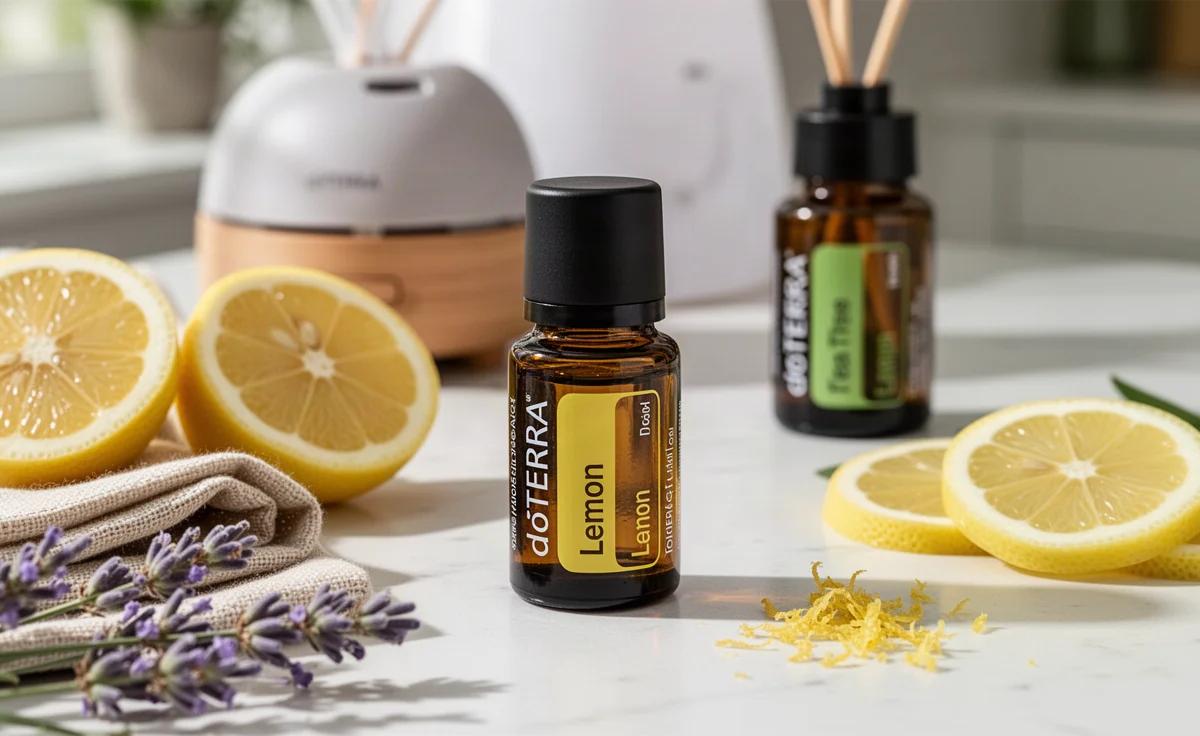
In our experience, the freshest results come from doTERRA Lemon, which smells like the inside of a ripe peel rather than cleaning fluid. A few drops mixed into warm water and castile soap will handle most daily kitchen messes. For tougher jobs, a paste of baking soda and lemon oil lifts burned-on food without scratching.
One caution worth repeating: citrus oils can dull some plastics and waxed finishes. Always test in a hidden corner first.
Simple Recipes You Can Mix Today
All-Purpose Kitchen Spray
This is the workhorse recipe we recommend most often. It takes under two minutes and handles counters, cabinet fronts, and table tops.
- Fill a 500 ml glass spray bottle with 250 ml white vinegar and 250 ml water.
- Add 2 tablespoons of castile soap.
- Drop in 15 to 20 drops of lemon essential oil.
- Close the bottle, shake gently before each use, and spray onto surfaces.
- Wipe with a damp microfiber cloth and buff dry for a streak-free shine.
The vinegar smell fades as it dries, leaving only a clean lemon scent. For a ready-to-go option, our Lemon Essential Oil Cleaning Spray Recipe walks through a few variations.
Sticker Residue Remover
Lemon oil beats scraping with a fingernail. Put one drop directly on the sticky patch, wait thirty seconds, then rub with a soft cloth. The gum loosens and lifts away. Wash the area afterward with warm soapy water.
Fridge and Bin Deodorizer
Place a few drops on a cotton ball and tuck it in the back of the fridge, or drop a few into the bottom of the bin before adding a new liner. Refresh every few days.
Lemon vs. Other Cleaning Oils
Different oils suit different jobs, and knowing the comparison saves time.
| Oil | Best For | Scent Profile | Notes |
|---|---|---|---|
| Lemon | Grease, sticky residue, stainless steel | Bright, citrus, sharp | Test on plastics; may dull finishes |
| Wild Orange | General degreasing, laundry | Sweet, warm citrus | Slightly gentler scent than lemon |
| Tea Tree | Bathroom surfaces, mold-prone areas | Herbal, medicinal | Strong scent; use sparingly |
| Eucalyptus | Bathroom freshening, floors | Clean, camphor-like | Avoid near young children |
While lemon handles the kitchen beautifully, bathrooms often benefit from doTERRA Tea Tree, which has a stronger, more herbaceous profile suited to damp spaces. For a sweeter alternative that still cuts grease, Wild Orange works well in laundry and general sprays. You might also pair lemon with Purify, a blend designed for neutralizing stubborn odors in rooms and fabrics.
Safety When Cleaning with Lemon Oil
Lemon essential oil is phototoxic when applied to skin that is then exposed to sunlight. During cleaning, your hands are the main contact point. If you handle undiluted oil, wash your hands with soap and water afterward, and avoid direct sun on that skin for about twelve hours. Better yet, wear simple kitchen gloves when mixing concentrated blends.
Keep pure lemon oil off marble, granite, and other natural stone surfaces. The acidity of citrus can etch these materials over time. Use the spray recipe above on sealed wood and tile, but spot-test natural stone elsewhere.
Store your spray in a dark glass bottle away from heat and light. Citrus oils oxidize within six to twelve months, and an oxidized oil smells off and is more likely to irritate skin. Mix small batches you will use within a few weeks.
Frequently Asked Questions
Can lemon essential oil actually disinfect surfaces?
No, lemon essential oil is not a registered disinfectant and should not replace a proper sanitizing product where germs are a concern. It excels at cutting grease, lifting sticky residue, and deodorizing, but it does not kill bacteria on surfaces.
Frequently Asked Questions
Can I use lemon essential oil to clean kitchen surfaces? Yes, a few drops diluted in water or a carrier liquid can be used to wipe down counters and other hard surfaces. Always test on a small area first and follow the product label.
How do I mix lemon essential oil for a DIY cleaning spray? Add several drops to a spray bottle of water, or combine with vinegar for a general-purpose cleaner. Shake before each use and avoid surfaces that may be damaged by oils or acids.
Is lemon essential oil safe to use around pets and children? Keep essential oils out of reach of children and pets, and use in ventilated areas. Some animals can be sensitive to citrus oils, so check with your veterinarian before use.