Lavender Oil for Sleep and Evening Calm
Discover how lavender oil supports a relaxing bedtime ritual. Learn dilution, diffusion timing, and which lavender species works best for sleep.
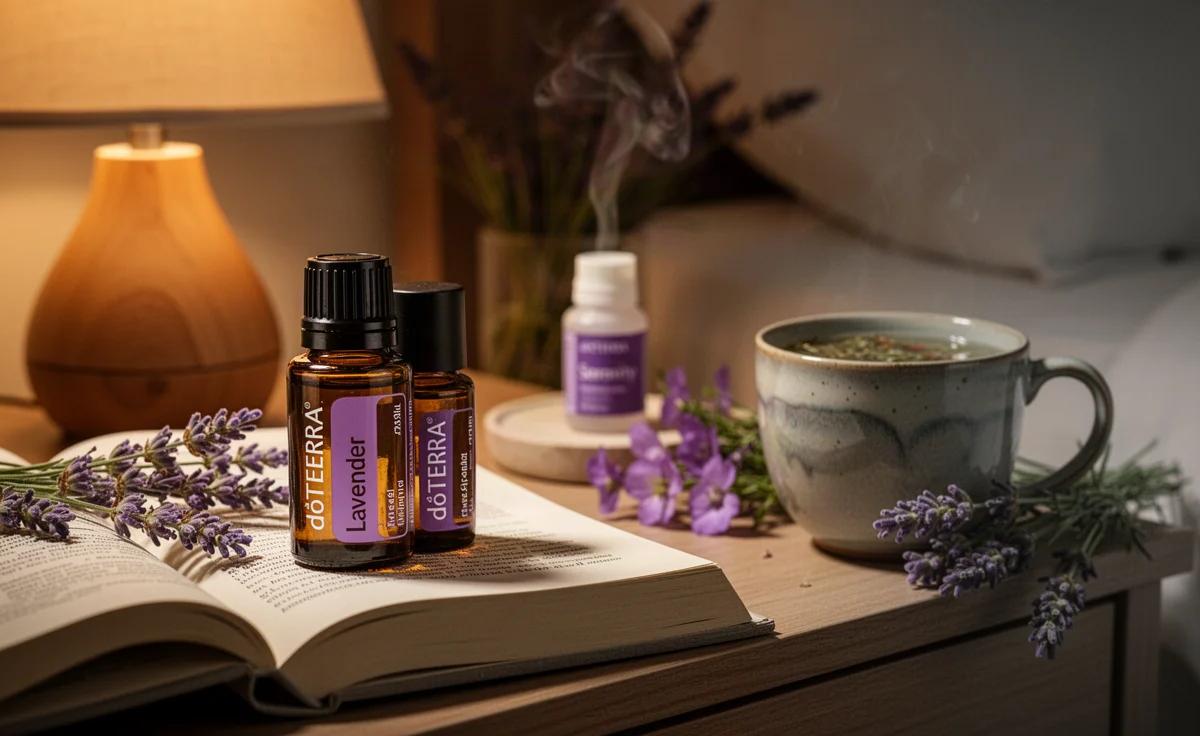
By Essential Synergy Team — Wellness Advocates & doTERRA enthusiasts
You have probably tried scrolling less, drinking less coffee after lunch, and going to bed at a reasonable hour. Yet your mind still keeps chatting at 11:30 PM. The direct answer is that Lavender essential oil, specifically Lavandula angustifolia, is the most widely used aromatherapy tool for building a pre-sleep routine. It will not knock you out. What it does well is anchor a repeatable evening ritual, one your brain learns to associate with slowing down. Diffuse it 30 to 45 minutes before bed, keep the session short, and repeat it nightly. That repetition matters more than the number of drops.
Why Lavender Works for Evening Routines
The value of lavender in a sleep context comes from ritual and association, not sedation. When you smell the same gentle floral note at the same time, in the same room, night after night, your nervous system starts treating that scent as a cue that the day is ending. Research published in the National Institutes of Health library suggests lavender aromatherapy is associated with improved perceived sleep quality in several small studies, though none claim it replaces medical care for ongoing sleeplessness.
We recommend choosing Lavender or the softer Serenity blend. Serenity combines lavender with other calming botanicals, which works well if you find pure lavender a bit sharp. A third option many readers ask about is Roman Chamomile, which has a delicate apple-like note and suits people who want something less floral.
One species distinction matters. Lavandula angustifolia, often called true lavender, is the sweet, gentle one used for relaxation. Lavandula latifolia, spike lavender, is camphor-rich and more stimulating. If the bottle does not specify the botanical name, check the label before using it at night.
How to Build a 4-Step Bedtime Diffusion Routine
A good Lavender Oil for Sleep habit is boring, deliberate, and short. Here is the sequence we suggest.
- Set up at the same time. About 45 minutes before bed, fill your diffuser with 100 ml of water and add 3 to 4 drops of Lavender. This is the adult range for a standard bedroom diffuser.
- Light and screens down. Turn off overhead lights. Switch to a warm lamp. Move your phone out of reach. The oil is only half the routine; the environment is the other half.
- Diffuse for 30 to 45 minutes. Run the diffuser while you wash up, read a few pages, or lay out clothes for morning. Then turn it off. Continuous all-night diffusion saturates your sense of smell and adds nothing.
- Repeat for at least a week. One random Tuesday will not rewire anything. Seven to ten consistent nights is where most people notice the association forming.
If you prefer a topical approach instead of a diffuser, dilute Lavender to 1 percent. That means roughly 1 drop in 5 ml (one teaspoon) of jojoba or fractionated coconut oil. Apply a small amount to the wrists or soles of the feet. Never apply undiluted lavender to broken skin or near the eyes.
Lavender Compared to Other Evening Oils
Not every sleepy-sounding oil is the same. This table shows how lavender stacks up against a few other common choices.
| Oil | Character | Best Use for Evening |
|---|---|---|
| Lavender | Sweet, floral, familiar | First choice for most bedtime rituals |
| Roman Chamomile | Delicate, apple-like | Good alternative when lavender feels heavy |
| Vetiver | Earthy, smoky, grounding | Helpful when the mind races |
| Cedarwood | Warm, woody, anchoring | Blends well with lavender for depth |
| Bergamot | Citrus, soft, not sharp | Uplifting but not stimulating; choose FCF for daytime skin use |
In our experience, the most common mistake is diffusing too much for too long. More drops do not create more relaxation. They create a room that smells like a spa for five minutes and then nothing, because your nose adapts and stops registering the scent.
Common Mistakes That Break the Routine
The fastest way to ruin a lavender habit is to change something every night. Switching oils, drop counts, and timing keeps your brain from ever pairing the scent with sleep. Pick one oil, one dose, and one start time, then hold it steady for at least a week.
Diffusing right beside your pillow is another frequent error. Close, constant exposure dulls your perception of the scent within minutes. Place the diffuser across the room so the aroma reaches you in gentle waves rather than one concentrated cloud.
Finally, do not treat lavender as a substitute for the basics. If you diffuse at 10 PM but scroll until midnight, the ritual has no room to work.
Adjusting the Routine for Small Bedrooms and Shared Spaces
A standard 3-to-4-drop dose can feel overwhelming in a small bedroom or a room you share with a partner who is scent-sensitive. In those cases, start with 1 to 2 drops and run the diffuser for 15 minutes instead of 30.
If your partner objects to any scent at all, skip the diffuser entirely. Place a single drop on a cotton ball inside a sealed jar, open it briefly before bed, then close it. You still get the cue without filling the room.
Frequently Asked Questions
Does lavender oil help with sleep? Many people use lavender oil as part of a calming bedtime routine. Individual experiences vary, so it is best to see how it fits your own preferences.
How do people use lavender oil at bedtime? Common options include adding a few drops to a diffuser or placing a drop on a cotton ball near the bed. Follow the label directions and use it only as directed.
Can lavender oil be applied to the skin? If you choose to use it topically, dilute it with a carrier oil and test a small area first. Avoid sensitive areas and consult a healthcare professional if you have any concerns.
This content is for general information only and is not medical advice. Essential oils are not intended to diagnose, treat, cure, or prevent any disease; consult a qualified healthcare professional before use.