Essential Oils for Hair Growth Support
Discover which essential oils support healthy-looking hair and a balanced scalp. Practical dilution tips, safe routines, and doTERRA favorites explained.
By Essential Synergy Team — Wellness Advocates & doTERRA enthusiasts
You have probably stood in the haircare aisle, bottle in hand, wondering whether a twelve-dollar serum will do anything your shampoo cannot. The more useful question is what you can do consistently at home, and essential oils fit neatly into that routine.
The direct answer: essential oils do not regrow hair in the way a drug might. What they can do is support a healthy scalp, reduce the look of dryness and flakiness, and make the hair you have appear fuller, shinier, and better cared for. Oils like Rosemary, Cedarwood, Lavender, and Tea Tree are the ones people reach for most, usually blended into a carrier oil and massaged into the scalp a few times a week. The key is patience and proper dilution, never applying them neat. We will walk through which oils make sense, how to use them safely, and what to expect.
Which Essential Oils Support Hair and Scalp Wellness
Scalp health is the foundation most people overlook. If the scalp is irritated, dry, or congested, hair looks dull before it even leaves the root. These oils are our go-to suggestions.
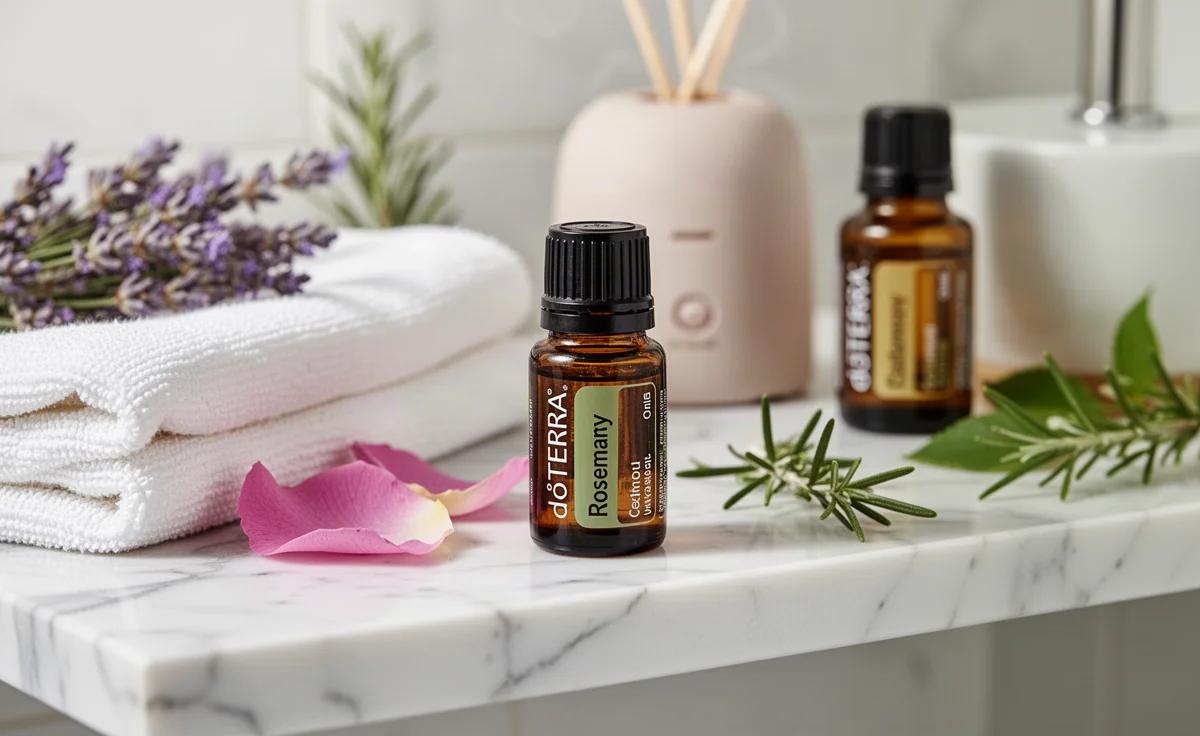
Rosemary is the first one we mention to readers asking about hair. Its sharp, herbal scent feels invigorating, and it blends well with almost any carrier. Cedarwood brings a warm, woody note and is often paired with Rosemary in scalp massage blends.
Lavender is the gentle all-rounder. It is well tolerated, calming to the senses, and easy to find. Tea Tree has a clean, purifying reputation, useful for scalps that tend toward buildup or flakiness. Peppermint feels cooling and tingly, which many people enjoy in a morning scalp massage.
For a broader blend, Deep Blue is not a hair oil in the traditional sense, but a drop or two added to a massage blend makes the experience feel more like a spa ritual. And Frankincense occasionally appears in scalp blends for its grounding, resinous aroma.
| Oil | Aroma | Why people reach for it |
|---|---|---|
| Rosemary | Herbaceous, sharp | Invigorating scalp massage |
| Cedarwood | Warm, woody | Grounding, pairs with Rosemary |
| Lavender | Floral, soft | Gentle, calming, beginner-friendly |
| Tea Tree | Fresh, medicinal | Purifying feel on the scalp |
| Peppermint | Cool, minty | Refreshing, cooling sensation |
How to Build a Safe Scalp Massage Routine
The method matters more than the oil itself. Here is the numbered routine we suggest when someone asks us how to start without overdoing it.
- Choose a carrier oil suited to your scalp. Jojoba is light and close to the skin's natural sebum, making it the most forgiving on the face and scalp. Fractionated coconut oil works well for body massage and leaves less residue. Sweet almond suits drier scalps.
- Mix a 2% dilution. That means roughly 2 drops of essential oil per 5 ml of carrier oil. For a full scalp session, 6-8 drops in about 20 ml of carrier is plenty.
- Patch test first. Apply one diluted drop to the inner elbow, wait 24 hours, and check for redness or itching.
- Massage with fingertips, not nails. Spend 3-5 minutes working across the scalp using slow, circular pressure.
- Leave the blend for 30 minutes, then wash as usual. Start with two sessions per week and adjust based on how your scalp responds.
We recommend reading the label every time and never increasing the drop count just because one session felt nice. More oil does not mean better results; it means a higher chance of irritation.
What Essential Oils Cannot Do for Hair
This part gets glossed over too often. Essential oils are concentrated plant extracts, not hair growth treatments. They cannot reverse genetic hair loss, extend the growth phase of a follicle, or repair split ends. The ends of your hair are dead protein and no oil, essential or otherwise, will fuse them back together.
Research published on sites like the National Institutes of Health covers certain plant extracts and scalp conditions, but the results do not translate into a promise of regrowth at home. What you can reasonably expect is a scalp that feels cleaner, hair that looks glossier when you condition properly, and a ritual that lowers stress. That may not sound dramatic, but it shows up in how your hair sits and catches light.
For a broader look at how oils fit into a natural wellness routine, our guide on essential oils for hair growth support covers the basics in more depth.
Frequently Asked Questions
Do essential oils help with hair growth? There is limited scientific evidence on this topic, and results can vary from person to person. Many people use essential oils as part of a general hair and scalp care routine.
How do you use essential oils on your hair or scalp? Essential oils are typically diluted with a carrier oil before being applied to the scalp or hair. Following label directions and dilution guidance is important for safe use.
Can essential oils irritate the scalp? Some people may experience sensitivity or irritation, especially if oils are used undiluted. A patch test and proper dilution are recommended before regular use.