Best Essential Oils for Sleep: A Complete Guide
Discover which essential oils actually support a calming bedtime routine, how to use them safely, and the blends worth trying for restful nights.
By Essential Synergy Team — Wellness Advocates & doTERRA enthusiasts
You have been lying awake for forty minutes, and tomorrow starts early. The short answer is that certain essential oils can help you build a sleep routine that signals your body it is time to wind down. Lavender, Roman chamomile, cedarwood, vetiver, and bergamot are the ones we recommend most often. The value is not in a single drop working like a switch. It is in repetition: the same scent, at the same hour, in the same quiet sequence, night after night. That association helps your mind shift from the day's noise into rest. Below, we cover which oils to choose, how to use them properly, and what a realistic bedtime ritual looks like.
Oils That Fit the Evening
Not every calming oil works the same way, and that is worth understanding before you buy.
Lavender (Lavandula angustifolia) is the classic starting point. It is soft, floral, and familiar. If you find it too heavy or powdery, Roman Chamomile offers a gentler, apple-like scent that suits smaller spaces. Both diffuse well and blend easily.
Cedarwood and Vetiver are base notes. They smell earthy and grounded, which many people describe as anchoring at night. They linger longer than floral oils, so a little goes a long way.
We also like Bergamot for evenings. It is citrusy but not energizing like lemon or grapefruit, especially when you choose a bergamot that has been processed to reduce bergapten, the compound that can make skin more sun-sensitive. You can find all of these as single oils, and doTERRA offers them individually: Lavender, Roman Chamomile, Cedarwood, Vetiver, and Bergamot.
Here is a quick comparison of how they behave in a bedtime routine:
| Oil | Scent Profile | Typical Role |
|---|---|---|
| Lavender | Floral, sweet | The baseline calming oil |
| Roman Chamomile | Soft, apple-like | Milder alternative to lavender |
| Cedarwood | Woody, warm | Grounding base note |
| Vetiver | Earthy, deep | Anchoring, long-lasting |
| Bergamot | Citrus, light | Uplifting without being stimulating |
How to Actually Use Them
A diffuser is the easiest entry point, but the ritual matters more than the device.
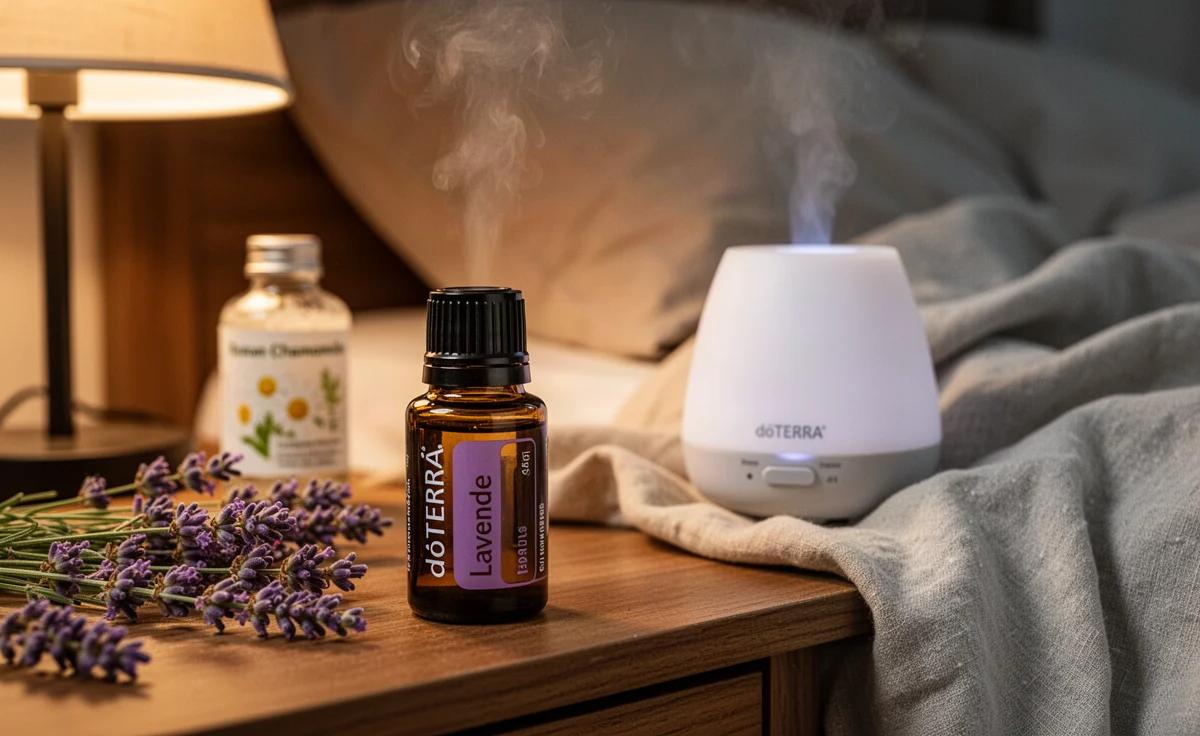
Diffusion: use 3-5 drops per 100 ml of water, run it for 30-45 minutes before bed, then turn it off. Do not run it all night. Continuous diffusion saturates the air and your nose stops noticing the scent anyway. Start the diffuser while you wash up or read, so the room carries the fragrance when you lie down.
Topical use: if you prefer a roll-on or a diluted massage oil, keep the dilution explicit. For a bedtime blend, 2-3 drops of essential oil per 5 ml of carrier oil is appropriate for most adults. Jojoba works well on the face and neck. Fractionated coconut oil is lighter for chest and shoulders. One drop diluted in the crook of your elbow, left for 24 hours before first use, tells you whether your skin tolerates the oil.
The repeatable sequence looks like this:
- At the same time each evening, start your diffuser with 3-5 drops of one oil or blend.
- Lower the lights and put screens away while the diffuser runs.
- Apply a diluted roll-on to wrists or the back of your neck if you like a skin-level scent.
- Get into bed only when the diffuser has finished, so the room is scented but not saturated.
What we recommend most often is pairing a diffuser blend with a diluted topical blend. The two routes reinforce each other, and the routine becomes automatic after a week or two.
Blends Worth Considering
If you prefer a ready-made option, two doTERRA blends fit the evening well.
Serenity combines lavender, cedarwood, and other calming oils in one bottle. It is designed specifically for quiet moments, which makes it a simple default when you do not want to mix your own.
Balance leans warmer and woodier. Some people use it earlier in the evening to shift out of a busy headspace, then switch to Serenity closer to bed.
If you want to test a small collection without committing to large bottles, the Aroma Essentials Collection includes several oils that work for both day and evening. It is a practical way to learn what your nose actually likes. We also encourage you to read our deeper article on best essential oils for sleep and restful nights if you want a longer walkthrough of routines.
Frequently Asked Questions
Which essential oils are commonly used in bedtime routines? Lavender, chamomile, cedarwood, and frankincense are popular choices for evening diffusion or pillow mists. Many people enjoy experimenting to find the aroma they personally find most calming.
How do I use essential oils before bed? Add a few drops to a diffuser in the bedroom, or dilute with a carrier oil for a gentle massage. Always follow label directions and avoid applying undiluted oils to skin.
Are essential oils safe for everyone to use at night? Not necessarily—safety varies by oil, age, pets, and health conditions, so check labels and consult a qualified professional if unsure. Keep oils away from children and pets unless the label says otherwise.
This content is for general information only and is not medical advice. Essential oils are not intended to diagnose, treat, cure, or prevent any disease; consult a qualified healthcare professional before use.